January 2026

Horses that proved why Cheltenham failure doesn’t rule out Grand National glory

Cheltenham’s seen as the ultimate benchmark in National Hunt racing, but history shows it doesn’t tell the whole story. For all the data, debate and Cheltenham betting markets built around the Festival, a poor run at Prestbury Park can be misleading.

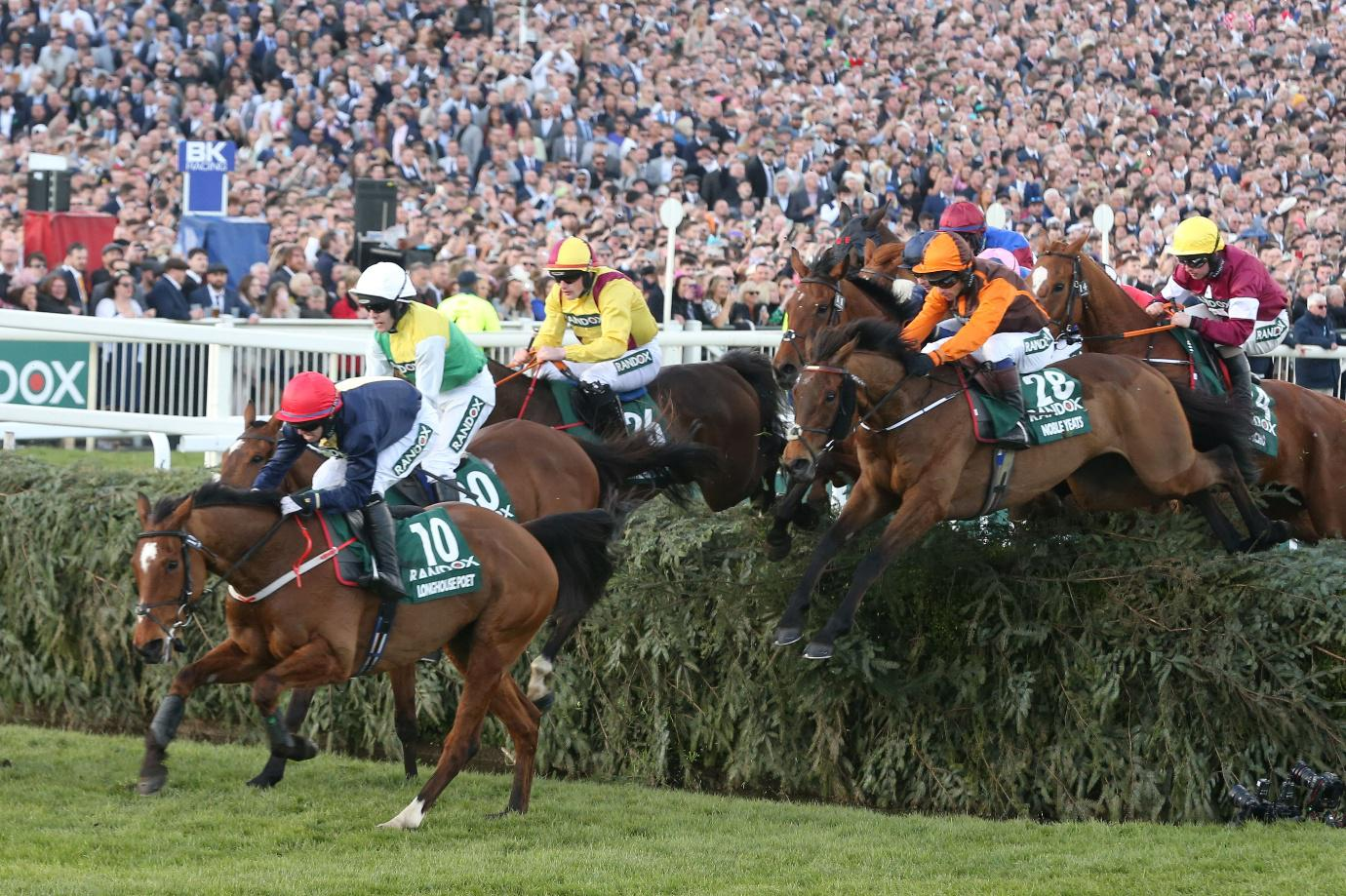
Some horses don’t suit Cheltenham’s sharper track or the intensity of Festival racing. Others are asked to run in races that prioritise speed over stamina when they’re built for marathon distances. When those same horses arrive at Aintree, over longer trips and a completely different set of fences, everything changes.

In recent years, several Grand National winners have followed this path – they’ve flopped at Cheltenham before producing the performance of their lives at Aintree. Their stories prove that Cheltenham form is useful, but it’s not the final word.

Corach Rambler

Corach Rambler’s main Cheltenham Festival runs came in the Ultima Handicap Chase, a long-distance handicap that produces staying types rather than Grade 1 stars. In 2022, he won that race over about three miles and a furlong, finishing first of 24 runners at 10/1 – a solid win but nothing that screamed Festival domination.

He followed up with another Ultima victory in 2023. Winning back-to-back at Cheltenham is impressive, but it wasn’t in the Festival’s top graded events. In the 2024 Cheltenham Gold Cup, he finished third behind Galopin Des Champs and Gerri Colombe.

However, Corach Rambler’s reputation rests on 15th April 2023, when he delivered one of the standout performances of the jump season to win the 175th Grand National at Aintree.

That victory was both a career high and a defining moment for the Scottish-trained gelding. It showed how a horse’s Festival form doesn’t always predict Grand National success.

Rule The World

Rule The World’s record before his 2016 Grand National win doesn’t include any standout Cheltenham Festival performances. He didn’t run in the marquee Festival races that season, and his earlier Cheltenham appearances ended with unremarkable results – no placings in championship chases or major handicaps.

His best Festival effort came years earlier with a sixth-place finish in the World Hurdle, a staying Grade 1, though that was nowhere near winning form.

Because of that lack of Festival impact, he was largely overlooked. Attention focused on higher-profile Festival runners instead. That made his Aintree success – coming from off the pace to win the 2016 Grand National at big odds – one of the more surprising results of that year’s jump season.

I Am Maximus

I Am Maximus didn’t make a big impression in major Cheltenham Festival races before his 2024 Grand National victory. Early in his career, he won an Open National Hunt Flat Race at Cheltenham in October 2020, but that was a standard NHF event rather than a championship chase, and it took place outside Festival week.

He’s since run in other high-profile races, but not in the key Festival handicap chases that punters watch closely each spring. As a result, he’s never been a headline name in Gold Cup Antepost betting markets, or in the build-up to Aintree. Yet he still went on to win over the Grand National fences at close to 7/1 in 2024.
Every Grand National Has a Horse Someone Will Always Remember

The Grand National is remembered less as a single race than as a succession of moments, stitched together by names that refuse to fade. Ask a group of racing fans what they recall most vividly and the answers rarely align. One remembers a dramatic fall at Becher’s. Another swears they still hear the roar when the winner emerges from the pack. But almost everyone will name a horse. Not necessarily the winner. Just the one that stayed with them.
This is the peculiar magic of the National. It does not insist on consensus. It invites personal attachment. A horse can finish fourth and still outlive the winner in someone’s memory. Another can be pulled up early yet remains unforgettable because it once carried hope for half a mile longer than expected. The race is democratic in that way, allowing individual meaning to form without instruction.

Some horses become famous because history tells us they should. Red Rum belongs to everyone now, as much a monument as a memory. Others are remembered more quietly, carried in private recollections rather than public record. These are the horses people mention without prompting, the ones that surface years later in conversations that begin, “Do you remember the year when…”

In the build-up to the race, that instinct to attach meaning begins early. Conversations drift from past editions to present speculation. From stories handed down as anecdotes of memorable Cheltenham betting moments to the anticipation that lead to these moments. Long before the tapes go up, people have already chosen the horse they will remember.

Why Memory Chooses Its Own Winner

What makes a horse linger in the mind is rarely performance alone. It is context. The colour of the silks. The way it travelled through the first circuit. The sense, however fleeting, that it might just do something extraordinary. Memory is drawn to near-misses and improbable surges as much as triumphs.

The Grand National and its winners magnifies this because of its scale. With so many runners, attention is constantly shifting. Viewers latch onto movement rather than position. A horse making steady progress through the field can become the focus of a living room, even if it never troubles the leaders. For a few fences, belief becomes vivid, and that is often enough.

The Horses That Belong to Individuals

Every long-standing racing fan has a personal list. Not written down, but stored instinctively. These are the horses tied to specific years, specific afternoons, sometimes specific people. A father’s pick. A horse backed on a whim. One chosen purely because the name felt right.

What matters is not whether the choice was sensible. It is that it created investment. The National rewards that emotional commitment by making every runner visible. For a moment, any horse can appear central to the story.

Why the Grand National Encourages Attachment

Other races are cleaner, more efficient, more easily summarised. The Grand National resists that. Its length and unpredictability create space for subplots. Horses appear and disappear. Fortunes rise and fall in seconds. The race refuses to focus solely on the winner.

This is why memory behaves differently here. People remember movement, effort and defiance. A horse that keeps going when others tire can feel heroic, regardless of where it finishes. The National allows these impressions to matter.

After the Finish Line

Once the race is over, the official result settles quickly. The winner is recorded. The margins are noted. But memory takes a different path. Days later, people still talk about the horse that almost got there, or the one that ran bravely until the final fence. These conversations keep the race alive beyond its conclusion.

In time, details blur. Years collapse into one another. Yet the remembered horse remains distinct. It becomes shorthand for a feeling, a moment when the impossible seemed briefly plausible.Today, many changes have taken place that don’t meet the golden days people recall.

Why That Will Never Change

As the sport evolves, the Grand National’s ability to create personal legends endures. Data grows richer. Coverage becomes more sophisticated. But none of that interferes with the instinct to choose a horse and follow it with unreasonable devotion.

Every year, someone watches the race and fixes their attention on a single runner. They carry that choice through the chaos and into memory. Long after the official winner is forgotten, that horse will remain vivid.

That is the quiet truth of the Grand National. It does not just crown a winner. It creates a thousand private stories, each anchored to a horse someone will always remember.

Who are the British-trained dangers in the Cheltenham Gold Cup?

You must cast your mind back some way for the last British-trained winner of the Cheltenham Gold Cup. 2018, in fact, when the Colin Tizzard-trained Native River saw off Nicky Henderson’s favourite Might Bite by a commanding four and a half lengths.

The home runners have had to settle for the odd minor prize in the last seven renewals, with Santini and Bravemansgame both notable runners up in 2020 and 2023, respectively, but could this be the year Britain finally regains jumps racing’s most prestigious prize?

There’s certainly reason to be hopeful. Betting exchange sites, like Betdaq, have several British-trained chances towards the fore of the market, and they have the form to prove they are worthy of being so prominent in the betting.

With that in mind, let’s look at the horses who could end the host’s eight-year wait for another Gold Cup success.

The Jukebox Man

The Cheltenham Gold Cup is the next obvious step after winning the King George VI Chase at Kempton Park on Boxing Day, but it hasn’t occurred since the legendary Kauto Star in the early 2000s that a horse has won both in the same season.

However, The Jukebox Man has a great chance of rewriting the history books. The Harry Redknapp-owned eight-year-old won a thrilling renewal of the Kempton showpiece, beating Banbridge, Gaelic Warrior and Jango Baie in a jaw-dropping finale that saw just half-a-length separate the front four.

It was devastating for trainer Ben Pauling and Redknapp when The Jukebox Man suffered a season-ending injury last season after winning the Kauto Star Novices’ Chase, but he’s a serious contender for the Gold Cup now after an impressive start to the campaign.

Jango Baie

The Jukebox Man might have earned the plaudits, and rightly so, after winning the King George on Boxing Day, but the Henderson-trained Jango Baie could have every chance of reversing the form in the Gold Cup, given how the finish materialised.

The six-year-old was just outside the eventual placings in fourth, but he was keeping on up the outside in the closing stages, and had the race been any further than three miles, there’s an argument to be had that the result may have been very different.

The additional two and a half furlongs for the Gold Cup trip, plus the gruelling task of getting up the Cheltenham hill at the finish, poses a very different challenge than what the King George field faced, and it might just suit last year’s Arkle winner down to a tee.

Grey Dawning

Dan Skelton is, undoubtedly, now Britain’s top trainer. He’s been the best of the rest behind Willie Mullins in the Champion Trainer standings by some distance for the last couple of seasons, and he should take home the title this year, given how things are currently going.

He now has 11 Cheltenham Festival winners to his name, but he’s yet to land one of the four Championship races, and a Gold Cup success would confirm his status as one of the sport’s elite handlers.

His hopes lie in Grey Dawning. The nine-year-old made a nice start to the season, as Harry Skelton barely had to ask him for an effort when landing the Grade 1 Lancashire Chase at Haydock in November. He probably needs another big run before Cheltenham to prove his Gold Cup credentials.