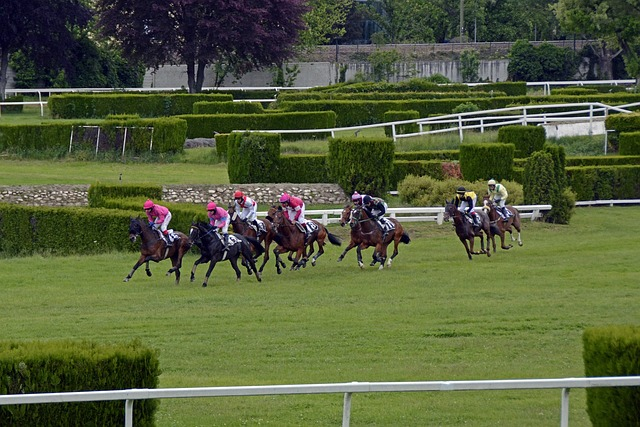
 At 4 miles 2½ furlongs, the Grand National is the longest race in the British jump-racing calendar and one of the sport’s most demanding stamina tests. As the longest jump race domestically, it features 30 fences over two circuits. Success requires a highly specific athletic profile. By distilling what past winners reveal about long-distance Chases, we can formulate the traits needed to prevail at Aintree. Understanding these historical blueprints cuts through the noise, highlighting profiles best suited for maximum stamina and jumping difficulty.
Why the Grand National is the Ultimate Test of a Stayer
What defines a stayer from a typical racehorse is the ability to handle extreme distances with consistent jumping and late-race energy. The Grand National serves as the ultimate lens to understand this profile.
Its unique course presents a different jumping challenge from most staying chases, with distinctive obstacles such as Becher’s Brook and The Chair testing balance, rhythm, and adaptability. Today’s fences use spruce woven into a more forgiving plastic-birch core, which has reduced some of the old severity without removing the need for accurate jumping. The modern race still demands stamina and jumping fluency, but rhythm and pace now matter more than they once did.
A true stayer needs to conserve energy for the closing stages, when the race often begins to unfold in earnest on the second circuit before the final two fences and the long run-in. This demands extraordinary reserves to handle the last two fences and the run-in.
What Recent Grand National Winners Have in Common
Analyzing recent renewals of the Grand National uncovers recurring strands forming a coherent blueprint. Traditionally it favored battle-hardened, experienced runners, but modern course renovations have shifted the ideal profile towards younger, less exposed talent.
Recent winners have tended to be younger, progressive chasers arriving with current-season form and enough racing to be match-fit. These shared characteristics suggest a broad modern pattern: younger, less-exposed stayers often compare favorably with older, more exposed runners.
Age Trends That Matter
Age remains an important factor, with recent winners strongly concentrated in the eight-to-nine-year-old bracket, finding the right balance of physical maturity and jumping experience.
Younger than eight tend to lack the robustness for Aintree’s unique fences (Noble Yeats is a notable exceptional seven-year-old), while older runners suffer statistical disadvantages; No 10-year-old has won the race since Ballabriggs in 2011, Older runners have found it harder to win in the modern era, although age alone should not be treated as an automatic negative.
Why Proven Stamina Keeps Predicting
High-class rating is necessary but not sufficient without proven stamina. Class alone is not enough; horses also need proven stamina for a race run over an extreme trip.
Conversely, the ideal profile includes proven stamina over three miles or further, which is why strong runs in major staying handicaps can be informative. This guarantees both positioning speed and stamina reserves to outlast competition.
What Weight Trends Can Tell You and What They Can’t
Weight trends are often cited but should be regarded as one factor among many. Historically, lower weights were often seen as an advantage, but that pattern has become less rigid in the modern race.
Yet, with the race now compressed due to field size limitations (34 runners), weight ranges between top and bottom horses are narrower. Consequently, classy horses are carrying more weight successfully, with top weights frequently finishing well. While many past winners sat in the middle of the handicap, recent renewals have shown that classier horses can also defy higher weights; it’s unwise to categorically reject heavier burdens.
Lessons From Famous Winners That Casual Fans Miss
Instructive lessons from high-profile winners demonstrate that winning profiles depend on combinations of factors.
- Corach Rambler: He looked well-treated by handicap standards and came into the race with proven stamina and a targeted preparation.
- His back-to-back wins in 2018 and 2019 also highlighted the value of tailored preparation, with his cross-country campaign helping to build rhythm, stamina, and jumping sharpness. This combination held despite the heavier weight carried in the second year.
- Red Marauder: His 2001 victory in bottomless ground conditions shows that sometimes raw stamina and jumping suffices despite adverse form metrics.
Which Trends Are Useful and Which Are Misleading
Distinguishing between genuinely predictive and misleading trends is paramount. Course experience is often overemphasized; many recent winners had not previously run in the Grand National. Likewise, no single trial race should be treated as decisive on its own.
Instead, recent prep runs in competitive staying chases can be more informative than loose assumptions about course form alone. Prioritizing horses with spring ground preference also works well, acknowledging many heavily weighted horses crave extreme winter conditions while Aintree typically offers quicker (yielding) spring ground. Fresh horses excelling on preferred ground provide better filtering criteria than course experience or traditional trials.
How to Spot the Stayers Profile Pre-Race
Some practical checklist points on spotting the stayer profile to eliminate weaker runners:
- Has the horse won over three miles? That remains a sensible minimum stamina check for this race.
- Look for horses able to hold a workable early position without being used up too aggressively.
- Do not default to older exposed chasers; recent winners have often been younger, progressive types.
- Look for consistent jumping. A hurdles prep can sometimes help preserve freshness, but it should be treated as a minor angle rather than a major rule.
- Avoid pure front-runners—the aggressive start often eats up their energy.
- Recent race fitness matters, and most winners arrive with a solid run of current-season form behind them.
Turning Stats Into Better Race-Day Choices
Historical trends lay the groundwork but are best considered alongside race-day context in terms of prices, market moves, bet types, and so forth. Ideal age/weight profiles don’t matter when prices are crushed due to hyped expectations.
When you are ready to apply these insights, remember that trends are most useful when paired with current market context, live odds, and a basic understanding of bet types. For those looking to place a wager, betting on horses is the natural next step to test these profiles against the live market. From a betting perspective, historical profiles are most useful when weighed against price rather than followed blindly. The better approach weighs stayer profiles against actual odds.
Next Step: Use History as a Filter, Not a Shortcut
Past Grand National winners’ profiles provide invaluable blueprints but no single pattern guarantees success. Course/conditions constantly evolve, so history should filter out vulnerable runners, not serve as an absolute shortcut.