Years

Grand National Winners of the 1920s

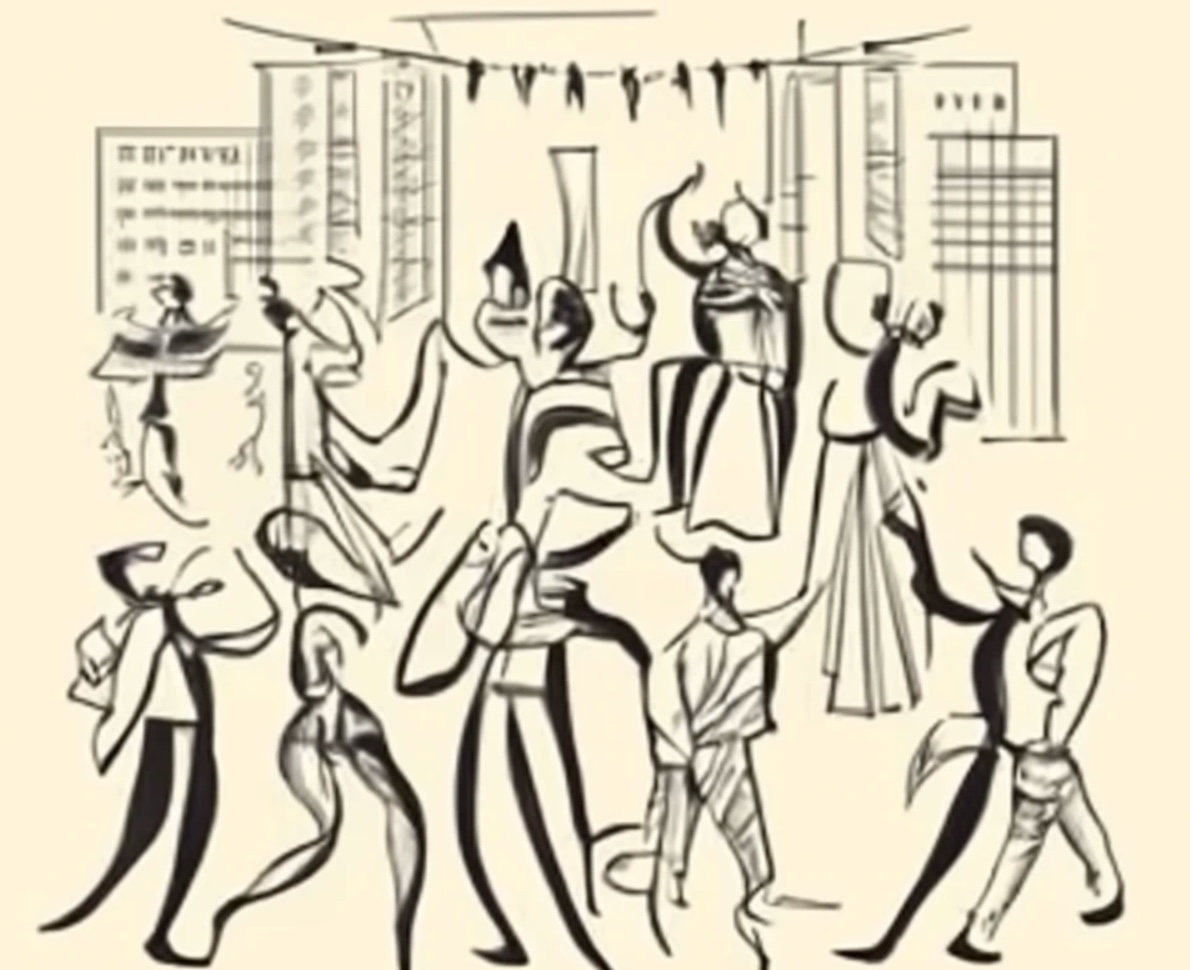
With the ending of World War I and formal signing of The Treaty of Versailles on the 28th June 1919, it was a period of social, political and cultural change.

The UK was heavily in debt with mass unemployment.

It was a time of high inflation, poverty, strikes and industrial disputes as workers fought for better pay conditions.

The General Strike in 1926 saw a nationwide strike by coal miners, supported by other industries.

On the good side, the Roaring Twenties saw a period of social liberation, especially for women. A time of jazz, cinema, art and literature.

Radio was a new medium of entertainment. In fact, the first BBC broadcast of the Aintree Grand National was aired in 1927. Sprig, a ten-year-old gelding, won at odds of 8/1f for trainer Tom Leader, ridden by his son Ted Leader in the ownership of Mary Partridge. Poignantly, she kept the horse in training in memory of her son who died in World War I.

Let’s take a look at the 1920s Aintree Grand National:

1920 – Troytown 6/1 Trianer: Algy Anthony

1921 – Shaun Spadah 100/9 Trainer: George Poole

1922 – Music Hall 100/9 Trainer: Owen Anthony

1923 – Sargeant Murphy 100/6 Trainer: George Blackwell

1924 – Master Robert 25/1 Trainer: Aubrey Hastings

1925 – Double Chance 100/9 Trainer: Fred Archer, Jr

1926 – Jack Horner 25/1 Trainer: Harvey Leader

1927 – Sprig 8/1f Trainer: Tom Leader

1928 – Tipperary Tim 100/1 Trainer: Joseph Dodd

1929 – Gregalach 100/1 Trainer: Tom Leader

1920 Troytown Wins the Aintree Grand National:

The Irish horse won well in heavy ground and pouring rain at odds of 6/1. Troytown was considered one of the best horses in the 1920s. The gelding was known for a robust style of racing crashing through fences. After winning the Aintree Grand National he headed to the Grand Steeple-Chase de Paris. Unfortunately, he was fatally injured. He had won the race in 1919.

Amazingly, in 1921, Shaun Spadah was not only the winner but the only horse to complete the course without falling. Placed horses: The Bore, All White & Turkey Buzzard were all remounted after falls to finish. Thirty-one horses didn’t finish in desperately heavy conditions. He finished runner-up in 1923.

Perhaps the most novel aspect of the 20s Aintree Grand National came in 1928-29 with successive 100/1 winners.

1928 – Tipperary Tim Wins the National at 100/1

Many readers will be familiar with the story of Tipperary Tim, trained by Joseph Dodd, ridden by Mr Bill Dutton in the ownership of Harold Kenyon. The ten-year-old Irish-bred gelding, a son of Cipongo by a mare called Last Lot. He was a son of the undefeated St. Simon.

Tipperary Tim was a slow horse but rarely fell and this would be his strength with the going described as ‘very heavy’. One of the jockeys shouted: ‘The only way you will win is if all the other horses fall!’

All 41 horses in opposition fell.

In misty conditions, there was a mass pile-up at the Canal Turn, and by the penultimate fence there were only three horses left standing. One of those saddle slipped and the other fell at the last, leaving Tipperary Tim to win by a distance.

Billy Barton was remounted to finish second.

Only two horses finished the race.

In 1929, Gregalach won at odds of 100/1. The seven-year-old won the 88th renewal of the Aintree Grand National for trainer Tom Leader, ridden by Robert W. H. Everett, in the ownership of Mrs. Marion A. Gemmell. There were 66 runners, the largest field for the National. Nine horses completed the course.
Grand National Winners of the 1930s

The Wall Street Crash in 1929 had a major impact on the 1930s in the UK and across the world. The depression led to over 3 million unemployed, widespread poverty, and social unrest. It was a time of tension between workers and employers.

Austerity measures cut deep.

From a technological perspective, the introduction of radio led to the prominence of the BBC.

Radio became a significant part of the Aintree Grand National, increasing interest beyond the live event. In fact, the first broadcast of the most famous steeplechase aired in 1927.

Let’s take a look at the 1930s Aintree Grand National:

1930 – Shaun Goilin 100/8 Trainer: Frank Hartigan
1931 – Grakle 100/6 Trainer: Tom Culthwaite
1932 – Forbra 50/1 Trainer: Tom Rimell
1933 – Kellsboro Jack 25/1 Trainer: Ivor Anthony
1934 – Golden Miller 8/1 Trainer: Basil Briscoe
1935 – Reynoldstown 22/1 Trainer: Noel Furlong
1936 – Reynoldstown 10/1 Trainer: Noel Furlong
1937 – Royal Mail 100/6 Trainer: Ivor Anthony
1938 – Battleship 40/1 Trainer: Reg Hobbs
1939 – Workman 100/8 Trainer: Jack Ruttle

The 1930s Aintree Grand National saw a selection of winners priced from 100/8 to 50/1.

Shaun Goilin won the 1930 Aintree Grand National. The Irish gelding, trained by Frank Hartigan, is something of an anomaly because he is the only winner of the National whose sire is unknown. The horse was well-backed by thousands of Irish supporters, including a number of Catholic priests.

A couple of trainers achieved two wins each, including Welshman Ivor Anthony with Kellsboro Jack (25/1) in 1933 and Royal Mail (100/6) in 1937.

Irishman Major Noel Furlong, owner-trainer of Reynoldstown, won the 1935 and 1936 Nationals. The first victory was ridden by his son, Frank, and the second by Fulke Walwyn, who later became an accomplished trainer.

In 1932, Forbra won at odds of 50/1. The seven-year-old was trained by Tom Rimell, ridden by Tim Hamey, and owned by William Parsonage.

If there was one horse that stood out in the 1930s, it was the immensely talented Golden Miller, trained by Basil Briscoe and owned by the rather wayward Dorothy Paget.

Golden Miller Wins the 1934 Aintree Grand National

The 93rd renewal was won by the seven-year-old at odds of 8/1. Although faster ground may have helped achieve a course record of 72 years, it was largely due to the talent of the horse, who carried a weight of 12:02. Gerry Wilson rode a brilliant race. Trainer Basil Briscoe stated that training horses was easy compared to managing his errant owner, Dorothy Paget. Golden Miller remains the only horse to have ever won the Cheltenham Gold Cup and the Aintree Grand National in the same year.

Golden Miller ran in the 1933, 1935, 1936, and 1937 Aintree Grand Nationals but did not finish the race in any of those years.

While Golden Miller had mixed fortunes in the National, he is well-known as the most successful Cheltenham Gold Cup horse ever. He won the race in five consecutive years (1932–1936).

Dorothy Paget was a leading owner of the time, with over 1,500 winners. She was a prominent figure in both National Hunt and Flat racing.

Interestingly, the two biggest gamblers in the 1930s were Paget and Mrs. J.V. Rank (sister of the founder of The Rank Organisation), who would often bet £10,000 on a race (£320,000 in today’s money).

Over the years, Paget would have 21 runners in the Aintree Grand National.

With the onset of World War II on September 1, 1939, it continued to be a very testing time for King and country.

Grand National Winners of the 1940s

With the start of the Second World War on the 1st Septemeber 1939, and the invasion of Germany on Poland, there was much uncertainty. The 1940s would be a decade of great change as seen with the partial loss of the Aintree Grand National.
With unrest in Europe, the 1940 Aintree Grand National took place at Aintree near Liverpool on the 5th April. Bogskar would start the decade in fine style winning for owner-trainer Lord Stalbridge at the odds of 25/1. The seven-year-old gelding won by four-lengths, ridden by Mervyn Jones.

The United Kingdom with their allie France, would begin fighting against Germany just two days after the invasion of Poland (3rd September, 1939).

From 1941 – 1945 the Aintree Grand National held no races (unlike the WWI) as the War Office took over the racecourse as a site for the Army.

In 1946, the 100th Aintree Grand National would make its return.

Let’s take a moment to review the 1940s Aintree Grand National:

1940 – Bogskar 25/1, Trained by Lord Stalbridge

1941 – No races held due to World War II

1942 – No raced held due to World War II

1943 – No races held due to World War II

1944 – No races held due to World War II

1945 – No races held due to World War II

1946 – Lovely Cottage 25/1, Trained by Tommy Rayson

1947 – Caughoo 100/1, Trained by Herbert McDowell

1948 – Sheila’s Cottage 50/1, Trained by Neville Crump

1949 – Russian Hero 66/1, Trained by George Owen

WWII ended with Japan surrendering to allied forces on the 2nd September 1945.

The 100th Aintree Grand National took place 5th April 1946.

If there is one thing we can say about the 1940s Grand National, it was a period of great uncertainty and a time where many outsiders would win the most famous steeplechase of them all. Perhaps it was a chance for those who backed such big-priced winners to rejoice in a moment of hope and thankfullness.

Some 2,407 days after Bogskar won the previous National we would see a new victor.

In 1946, Lovely Cottage won the Aintree Grand National at 25/1. Bobby Petre punched the air. He won by four lengths for trainer Tommy Rayson. Jack Finlay finshied second (100/1), while Prince Regent finished third (3/1f). Only six of the thirty-four starters completed the course. Sadly, Symbole suffered a fatal injury at Becher’s Brook.

Any backers who found the winners of the Aintree Grand National from 1947 – 1949 had a smile on their face because they returned at substantial odds.

1947 Aintree Grand National –

Caughoo won at odds of 100/1. One of only five horses to win at such odds in the history of the race. Rider Eddie Dempsey won the race on heavy ground by 20-lengths. Amazingly, 57 runners took part. Owner John J. McDowell paid just £50 for Caughoo. Fellow Irish raider Lough Conn finished second, while French runner Kami came third.

1948 Aintree Grand National –

1st Sheila’s Cottage 50/1

2nd First Of The Dandies 25/1

3rd Cromwell 33/1

4th Happy Home 33/1

Interesting to note that Sheila’s Cottage was the first mare to win the National for 46 years (Shannon Lass, 1902), one of only 12 in the history of the race.

1949 Aintree Grand National –

1st Russian Hero 66/1

2nd Roimond 22/1

3rd Royal Mount 18/1

4th Cromwell 6/1

Winning owner, Fearnie Williamson, got a first prize of £13,000.

The 1940s proved to be a conflicting time for all and a period of great uncertainty. However, the long six-year and one day wait for victory on the battlefields and return of the Aintree Grand National would bring joy.

Even in times of difficulty there are brighter days to come.

Lest we forget.

Grand National Winners of the 1950s

After the finish of the Second World War, the country was recovering and although times were hard and rations didn’t officially end until 1954 the future was one of optimism. With no Aintree Grand National from 1941 – 1945, race fans were triuphant to see Lovely Cottage win the following year for trainer Tommy Rayson, ridden by Captain Bobby Petre in the ownership of John Morant. The nine-year-old won at odds of 25/1 by four lengths.
The 1950s saw a decade of Aintree Grand Nationals.

Let’s take a look at the winners:

1950 – Freebooter 10/1f, Trainer Bobby Renton

1951 – Nickel Coin 40/1, Trainer Jack O’Donoghue

1952 – Teal 100/7, Trainer Neville Crump

1953 – Early Mist 20/1, Trainer Vincent O’Brien

1954 – Royal Tan 8/1, Trainer Vincent O’Brien

1955 – Quare Times 100/9, Trainer Vincent O’Brien

1956 – E.S.B 100/7, Trainer Fred Rimell

1957 – Sundew 20/1, Trainer Fred Hudson

1958 – Mr. What 18/1, Trainer Tom Taafe, Sr

1959 – Oxo 8/1, Trainer Willie Stephenson

If there was one trainer who lifted horse racing out of the doldrums it was Vincent O’Brien, from Curchtown, County Cork, Ireland. A career that lasted 50 years (1944 – 1994), it is easier to detail races he didn’t win. Whether National Hunt or Flat racing, his accolades were many.

However, it is worth knowing that O’Brien turned his attention to the Flat turf after his three Grand National successes, training at Ballydoyle (1951).

After immense success from 1948 – 50 with Cottage Rake wining the Cheltenham Gold Cup three times on the trot. And later Knock Hard in 1953, he was taking all before him.

O’Brien fielded his first National runner in 1951. Royal Tan finished 2nd at odds of 40/1, ridden by his brother, Phonsie. The partnership took their chance the following year when Royal Tan fell at the 30th fence.

However, the successes would come thick and fast from 1953 – 1955 with three very talented thoroughbreds.

1953 Aintree Grand National

Eight-year-old gelding Early Mist ran out an easy 20-length victor in the 107th running of this famous steeplechase. The 20/1 shot was ridden by Bryan Marhsall for owner Joe H. Griffin. Of the 31 starters, only five horses completed the course.

1954 Aintree Grand National

After finishing runner-up in 1951 and falling the following year it was third time lucky for the ten-year-old Royal Tan who held the late charge of the much larger Tudor Line winning by a neck. Irish Lizard finished third. Bryan Marshall enjoyed back to back victories. Sadly four horses were fatally injured, the worst record for any National.

1955 Aintree Grand National

Vincent O’Brien made it three consecutive wins with Quare Times. The nine-year-old gelding won at odds of 100/9, ridden by Tom Taaffe, for owner Cecily Welman. Stablemate and previous winner, and favourite, Early Mist, finished a creditable nineth. They also fielded Royal Tan who returned twelth. The heavy going taking its toll on both horses who carried over 12 stone. Quare Times won well by 12-lengths carrying 11 stone. Tudor Line ran superbly in second place while Carey’s Cottage finished third.

After outcry over fatallities in 1954, the severity of many fences was reduce and the water jump omitted.

The Queen Mother’s M’as Tu Vu fell at the open ditch, fence 27.

Other noted races in the 1950s include the win of E.S.B. (1956). This was the year when the Queen Mother’s Devon Loch looked a racing certainty before half-jumping and bellyflopped on the run-in, just yards from the winning line.

In 1959 Oxo, trained by Willie Stephenson won, ridden by Michael Scudamore. Remarkably from the 32 runners only 4 horses finished. Sadly, two horse were fatally injured (Henry Purcell & Slippery Serpent). A debate was held in Parliament and Home Secretary, Rab Butler, met the National Hunt Committee in response to safety concerns raised by The League Against Cruel Sports.

The 1950s Aintree Grand Nationals saw a number of outstanding performances from horses, trainers and jockeys. Vincent O’Brien was a noted performer as were his runners, especially the ultra tough Royal Tan. Many of these gallant horses ran exceptional races and showed great consistency. Horse welfare was a keynote for cause and consideration.

The Aintree Grand National – The War Years

The Grand National is steeped in history.

Over 180 years of winners and losers. Stories so wild they are stranger than fiction. In the early years, the ‘National’ was called The Grand Liverpool Steeplechase (1839-46).

In fact, the first Grand National Steeplechase, as we know today, was run on the 3rd March 1847. Mathew, trained by John Murphy, ridden by Denny Wynne at the odds of 10/1. He raced in the colours of County Cork landowner, John Courtenay.

In those days the start of the race was describe as a ploughed field…

Throughout the years, the Aintree Grand National has detailed many poignant times.

Here are a few which stick in the mind:

1839 – The first winner of the National, Lottery.

1928 – Tipping Tim wins at 100/1. Only two horses completed the course after a mass pile-up at the Canal turn.

1934 – Golden Miller became the only horse to win the Gold Cup and Grand National in the same year.

1956 – Devon Loch looked a certain winner for the Queen Mother when collapsing just before the finishing line.

1967 – Foinavon won at odds of 100/1 after avoiding the melee at the 23rd fence. In 1984 the fence was name Foinavon.

1973 – 77 Red Rum, the most famous horse in the world won the Grand National 3 times for trainer Ginger McCain & owner Noel Le Mare.

1981 – Bob Champion & Aldaniti captured the heart and mind of race fans across the globe with the story of triumph over tragedy.

1993 – The Grand National was void after a false start. The only time this has ever happens.

2010 – Tony McCoy won his first Grand National on Don’t Push It after 15 attempts.

2019 – Tiger Roll is the first horse since Red Rum to win back to back victories and only denied a chance for three successes then the 2020 race was cancelled due to the COVID 19 pandemic.

However, there have been years which are seldom talked about. Truly difficult times which saw nations lose millions of men, women and children. A time when horses went forward to help in the efforts of King and country.

The War Years.

The assignation of Archduke Franz Ferdinand on the 28th June, 1914 lead to truly terrible times.

The conflict of World War I started on the 28th July 1914 and ended on the 11th November 1918 with the signing of the Armistice of Compiegne which took place at 11am (the eleventh hour of the eleventh day of the eleventh month). A period of 4 years, 3 months and 14 days of conflict. There were over 20M military and civilian deaths.

An estimated 8 million horses, donkeys and mules were killed during World War I. Horses bore a significant loss in the conflict with mounted charges, transport, communication and agricultural work.

It is important to remember the Grand National with regard to the war effort.

In 1915, Ally Soper won the 77th Grand National by 2 lengths for trainer Aubrey Hastings, ridden by Jack Anthony, in the ownership of Lady Margaret Nelson.

This would be the last race to be held at Aintree, Liverpool. The course was taken over by The War Office, for the administration of the British Army.

However, the Grand National would find a new home from 1916 – 1918 held at Gatwick Racecourse (presently the site of Gatwick Airport, London). The course was modified and similar to Aintree: the same distance but one fewer fence.

The 1916 – The Racecourse Association Steeplechase:

Six-year-old, Vermouth won at odds of 100/8 for trainer James Bell, ridden by Jack Reardon for owner P. F. Heybourne.

The 1917 – 1918 The War Nationals:

Both held at Gatwick Racecourse. It should be noted that these three races are often not include in the Grand National record book.

It should never be forgotten.

1917 – Ballymacad wins for Trainer Aubrey Hastings, ridden by Edmund Discroll, in the ownership of Sir George Bullough, known as a Victorian playboy.

1918 – Poethlyn, and eight-year-old gelding, was trained by Harry Escott, ridden by Ernie Piggott in the ownership of Gwladys peel.

It is important that we appreciate that many horses which participated in Grand Nationals were used for military purposes, including cavalry. The Grand National was seen as a key sporting tradition which maintained continuity even during wartime. It was important for morale in a time of crisis. There was a reduced field and fewer spectators but it still went ahead.

In 2014, Warrior, known as ‘the horse the German’s couldn’t kill’ was awarded an honorary Dickin Medal (animal Victoria Cross) for gallantry in World War I. Dogs, pigeons and even a cat have been awarded medals for bravery and their contribution to the war effort.

The bronze medal reads: ‘For Gallantry’ and ‘We Also Serve’. It is held by a ribbon of green, brown and blue to symbolize water, land and air services.

Remember Steven Spielberg’s film War Horse (2011) based on Michael Morpurgo’s 1982 novel which explore the bond between a young man and his horse devastated by the impact of war. A story of hope and resilience.

1919 – Saw the resumption of The Aintree Grand National, Liverpool. Poethyln went on to win for connections this time 11/4f, the shortest odds of any winner in the history of the race.

The conflict of World War II began from the 1st September 1939 – 2nd September 1945.

A period of 6 years and 1 day.

The Grand National 1941 – 1945. No races were held due to the World War II.

Who says the Grand National doesn’t have a story to tell?