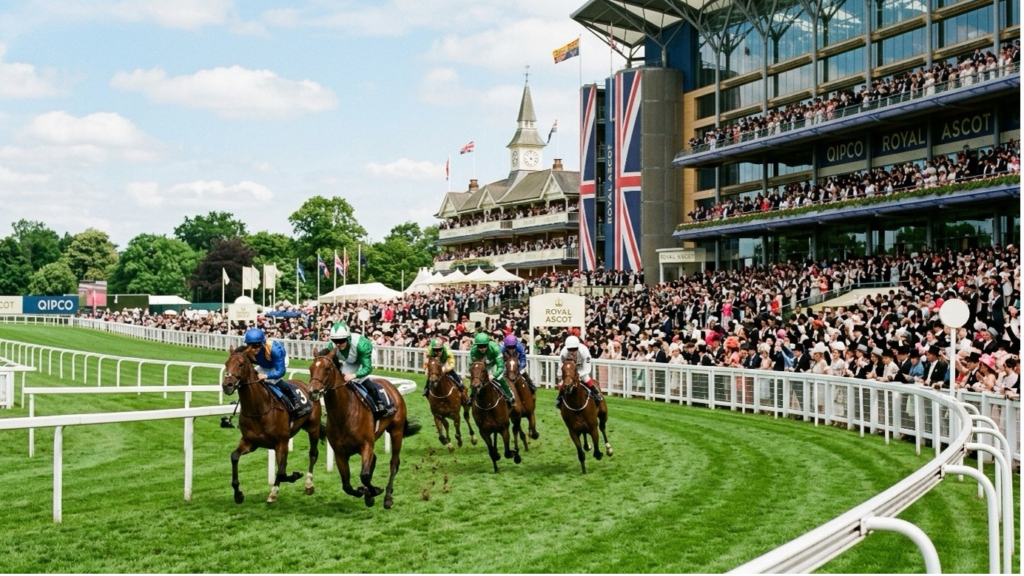
 British racing long lacked a settled end to its Flat season. Champions Day at Ascot, five championship races and a big-field handicap staged on a Saturday in mid-October, was built to supply one, and with more than £4m on offer it is British racing’s richest afternoon. The entries are studied for weeks by anyone weighing up Champions Day odds.
Why British racing wanted a finale
The day arrived in 2011 as the climax of the British Champions Series, 35 Group races split into five categories, from sprinting to staying. The model came from abroad: France had the Prix de l’Arc de Triomphe and America the Breeders’ Cup, while Britain’s best horses drifted to those meetings, or into retirement, with no domestic championship to settle. The Qatari investment group QIPCO backed the project and Ascot was handed the finale.
Filling the card meant moving races. The Champion Stakes was taken from Newmarket, where it had run since 1877, and given a £1.3m purse that made it the most valuable race in the country. Attendances across the series rose 7% in its first season, against 3.9% for the season as a whole. The series was wound up in 2025, but the afternoon it led into has outlived it.
The six races on the card
The Champion Stakes over 1m 2f is the centrepiece and the richest of them. The Queen Elizabeth II Stakes, moved from late September, settles the mile championship, the British Champions Sprint Stakes is run over 6f, the Fillies and Mares Stakes over 1m 4f and the Long Distance Cup over 2m. The Balmoral Handicap, a full-field mile handicap, closes the card.
Three were promoted later: the Fillies and Mares to Group 1 in 2013, its prize money doubled, the Sprint in 2015 and the Long Distance Cup in 2025, giving Ascot five Group 1 races on one afternoon.
The races nobody forgets
Frankel supplied the first two. He won the inaugural Queen Elizabeth II Stakes by 4 lengths, then returned the following October for the last start of his career. On soft ground he missed the break, conceded first run to Cirrus Des Aigles, the 2011 winner, and still took the Champion Stakes by 1¾ lengths. Tom Queally rode him, Sir Henry Cecil trained him, and he retired unbeaten in 14.
Two years later Noble Mission, Frankel’s younger brother, won the 2014 Champion Stakes for Cecil’s widow Lady Cecil under James Doyle. Cracksman then won it twice, by 7 lengths from Poet’s Word in 2017 and 6 lengths from Crystal Ocean in 2018, for John Gosden and Frankie Dettori. No other horse has won it twice at Ascot.
Baaeed gave the day a breakthrough and an upset. His 2021 Queen Elizabeth II win, a neck from Palace Pier under Jim Crowley, marked him out. He returned in 2022 unbeaten in 10 starts and finished fourth on soft ground behind Bay Bridge.
The best records on the day
Work through the horse racing results for every renewal since 2011 and two yards stand apart. The Gosden stable at Clarehaven, John’s and latterly John and Thady’s, has 11 wins in the championship races, among them Cracksman’s double, two Queen Elizabeth II Stakes and four Long Distance Cups. Aidan O’Brien has 9, including the Long Distance Cup with Fame And Glory in 2011 and Kyprios in 2024.
No rider has matched Dettori, who won 11 of those races across all five categories. He bowed out of British racing there in 2023 with a double, Trawlerman in the Long Distance Cup and King Of Steel in the Champion Stakes. Hollie Doyle reads well too, winning the Long Distance Cup three years running on Trueshan from 2020 and the 2020 Sprint on Glen Shiel.
Why the day has lasted
Its authority comes from its place in the calendar. It falls after the Arc and before the Breeders’ Cup, catching horses at the end of a full campaign, and it is often the last chance to see a champion before stud. Frankel, Cracksman and Baaeed all had their final day there, which is what gives the card its weight.