Which Cheltenham Festival hopefuls took a form hit at the Dublin Racing Festival?

For all the excitement it generates, the Dublin Racing Festival has a brutal side effect for ante-post punters looking to bet on Cheltenham. While some contenders enhance their reputations at Leopardstown, others see carefully built Festival profiles unravel in the space of a single afternoon, with markets reacting fast and often unforgivingly.

This year’s meeting was no different. Several high-profile Cheltenham hopefuls left Dublin with more questions than answers, and in some cases, their Festival credentials took a significant dent.

Final Demand – Brown Advisory bubble burst?

The biggest shock of the weekend came in the Grade 1 Novice Chase, where Final Demand ran a race that few saw coming. The Willie Mullins-trained novice had been one of the shortest ante-post favourites across the entire Cheltenham Festival, trading as low as 5/4 for the Brown Advisory Novices’ Chase and sent off a heavy odds-on favourite at Leopardstown.

What followed was deeply underwhelming. Final Demand never travelled with his usual authority and ultimately finished third of four, beaten over 12 lengths by stablemate Kaid d’Authie. It was the kind of performance that forces a full reassessment rather than a gentle market tweak.

The reaction was immediate. His Brown Advisory price drifted sharply to around 4/1, reflecting both the shock of the run and the depth of alternatives now emerging in the novice chase division. While it would be dangerous to assume he’s suddenly a bad horse, Leopardstown can be unforgiving on an off day, it’s equally hard to ignore just how little he showed when it mattered most.

Lossiemouth – a missed moment?

Lossiemouth’s form hit is more subtle, but potentially just as significant. At last year’s Cheltenham Festival, she was controversially kept to the Mares’ Hurdle, a race she won, rather than being allowed to take her chance in the Champion Hurdle. That decision always felt like a deferral rather than a conclusion, with many expecting her to be a major player in the championship division this season.

However, her defeat in this year’s Irish Champion Hurdle at the Dublin Racing Festival, where she was beaten by Brighterdaysahead, may have finally closed that door. In a season where the Champion Hurdle picture remains fragile and full of gaps, Lossiemouth failed to seize what looked like a genuine opportunity to stamp her authority.

As a result, the Champion Hurdle now looks an increasingly unlikely target next month, with a return to the Mares’ Hurdle the more probable route once again. That isn’t a slight on her ability, but from a market perspective, it represents a clear form hit in terms of championship ambitions.

Marine Nationale – Champion Chase credentials tested

Marine Nationale arrived at Leopardstown as the reigning Champion Chase winner, but left with his aura slightly dulled after finishing a distant second to Majborough in the Dublin Chase. The margin, 18 lengths, told a stark story, particularly as Majborough answered lingering doubts about his jumping with a slick, confident round.

There are mitigating factors. Marine Nationale was encountering heavy ground for the first time, and his performance suggested conditions played a role in blunting his effectiveness. Cheltenham’s Old Course in March is unlikely to be as testing, and Majborough’s jumping, while impressive here, remains something that could come under pressure in a Championship-speed race.

Still, from a market perspective, the balance of power shifted. Marine Nationale went from solid title-holder to horse with something to prove, and that alone represents a form hit, even if excuses can be made.

The Dublin Racing Festival doesn’t just identify Cheltenham contenders, it exposes them. For some, it confirms Festival readiness. For others, it forces punters to confront uncomfortable truths about hype, conditions, or misplaced confidence.

By the time Leopardstown fades from view, Cheltenham markets are rarely the same. And for these hopefuls, the road to March suddenly looks a little steeper than it did before the tapes went up in Dublin.
The fastest Cheltenham Gold Cup winning times ever

As the build-up to the Cheltenham Festival gathers pace, records and milestones from the Gold Cup are never far from the conversation. Spring festival talking points always include standout moments from this iconic race.

The Gold Cup is the biggest prize in jump racing in Britain and Ireland, and timing is part of what makes it so special. Over a testing three-and-a-quarter miles on Cheltenham’s New Course, the fastest winners have carved their names into history with quick times, great performances from horse, jockey and trainer, and sometimes surprising results.

Here are the quickest Gold Cup winning times ever recorded.

Poet Prince

Poet Prince holds the record for the fastest Cheltenham Gold Cup winning time of all. He won the 1941 renewal in 6 minutes and 15.6 seconds – a mark that has never been beaten. Ridden by Roger Burford and trained by Ivor Anthony, he went to post at 7/2 in a competitive wartime field.

The race took place during the Second World War and was run on Cheltenham’s old course rather than the New Course used today. Conditions were unusually quick for March, and the pace was strong from an early stage. Poet Prince pulled clear of Savon and Red Rower to win decisively.

Red Rower

Just four years later, Red Rower came close to matching Poet Prince’s record. He won the 1945 Gold Cup in 6 minutes and 16.2 seconds – only fractions slower. Red Rower had already shown his liking for the race, having finished second in 1941, and returned as the 11/4 favourite.

Owned by Lord Stalbridge, who also trained him, Red Rower was ridden with confidence and control. He beat Schubert and Paladin in a well-run race that again benefitted from good ground and an honest gallop. His time remains the second fastest in Gold Cup history.

Long Run

Long Run produced the fastest Gold Cup winning time on the New Course in 2011, stopping the clock at 6 minutes and 29.7 seconds. Trained by Nicky Henderson and ridden by amateur jockey Sam Waley-Cohen, he went off favourite in a high-quality renewal.

What made the performance so striking was the opposition he beat. Kauto Star and Denman, two legends of the race, filled the places behind him. Long Run travelled smoothly, jumped accurately and stayed strongly up the hill to set a new benchmark.

Looks Like Trouble

Looks Like Trouble set a new standard at the turn of the millennium when he won the 2000 Gold Cup in 6 minutes and 30.3 seconds. Ridden by Richard Johnson and trained by Noel Chance, he started at 9/2 rather than as a short-priced favourite.

He crossed the line five lengths clear. His winning time was the fastest recorded on the New Course at the time and remained the benchmark for more than a decade. It was a defining moment for horse, jockey and trainer.

Norton’s Coin

Norton’s Coin’s Gold Cup victory in 1990 remains one of the most remarkable results the race has ever produced. He won in 6 minutes and 30.9 seconds despite being sent off at 100/1. Trained and ridden by Sirrel Griffiths, a Welsh dairy farmer, he arrived at Cheltenham with little attention from the wider racing public.

Once the race was run, the result was decisive. Norton’s Coin beat pre-race favourite Desert Orchid, who finished third, and Toby Tobias, who was second.

How Trainer Strategy Changes in the Build-Up to the Cheltenham Festival

Flickr

The Cheltenham Festival is almost underway, with the classic 28 races spread across four days starting on March 10th, 2026. With over 200,000 fans expected to flood the iconic Cheltenham Racecourse in Prestbury, attention will soon turn to Cheltenham Festival betting odds, with big names like Constitution Hill, Inothewayurthinkin, and Galopin Des Champs returning to try to make their mark on the 2026 event.


As much as the eyes turn to the horses and the odds, it’s the trainers working tirelessly, especially in the run-up to Cheltenham, to condition their horses for the unique competition. Most of them will have had winter races, but nothing compares to Cheltenham Racecourse.


Below, we’ll explore how training strategies change in the build-up to the Cheltenham Festival.


Race Prep for Cheltenham

As Jamie Snowdon, leading trainer at Folly House, who has raced more than 450 horses at tracks throughout the UK, said in an interview with the BBC, Cheltenham is “like the Olympics of our sport, where the best take on the best“.


His team works tirelessly to prepare the horses for the biggest races of the season, and for us right now, that’s Cheltenham 2026. According to Snowdon, who oversees the development of a multitude of horses across his 60 stables, he spends his time jigsawing the pieces together at the right time to put the horses in optimal condition.


That typically involves a 06:00 start to the day to prep and saddle the horses before they go through the paces with gallops. They’ll train in groups and ride in pairs to give competition, undertaking jumping, bleep tests, interval training, and a general morning exercise routine that isn’t necessarily too taxing for the horses.


After a morning of training, they’re washed, fed, and made comfortable for the rest of the day. And that will be the basics for most trainers and horses. Nothing too crazy, just steady prep to make sure they’re competition-ready and without injury.


Fine-Tuning Training Intensity

As you can see, there isn’t much in the way of training intensity. It’s not exactly a trot in the park, but it definitely isn’t too intense. The worry with intensity is injury, especially this close to the Cheltenham Festival.


As you can see by the regime Jamie Snowdon and his team follow, the focus is more on:


  • Shorter, sharper pieces of work
  • More emphasis on recovery
  • Careful monitoring of weight and appetite


Snowdon also tells the BBC that they’re especially interested in the horse’s temperament, with trust being an essential component to training any pet, let alone a thoroughbred racehorse. The horses must have a good relationship with the jockeys, who apparently come with “lots of carrots” and good intentions to do the best for the horse.


Strategic Race Targeting

As we move through February, trainers start to think about race targeting and the strategy they think is most likely to get the best result for their horses on the day.


Trainers weigh up:


  • Field depth and likely opposition
  • Whether to run against stablemates
  • Novice vs open company
  • Avoiding specific rivals


If you follow the Cheltenham Festival closely, you’ll almost always see late changes in race targets, and this is often the reason. Trainers notice better opportunities, and, naturally, they’re obviously going to go for them.


Trainer strategies definitely change in the run-up to Cheltenham. The goal is clearly to get the most out of the horse on their competition day, and as you can see from what we’ve said, the focus is more on conditioning than intense training. We’re just around the corner from Cheltenham 2026, so let’s see what training strategy wins.


Horses that proved why Cheltenham failure doesn’t rule out Grand National glory

Cheltenham’s seen as the ultimate benchmark in National Hunt racing, but history shows it doesn’t tell the whole story. For all the data, debate and Cheltenham betting markets built around the Festival, a poor run at Prestbury Park can be misleading.
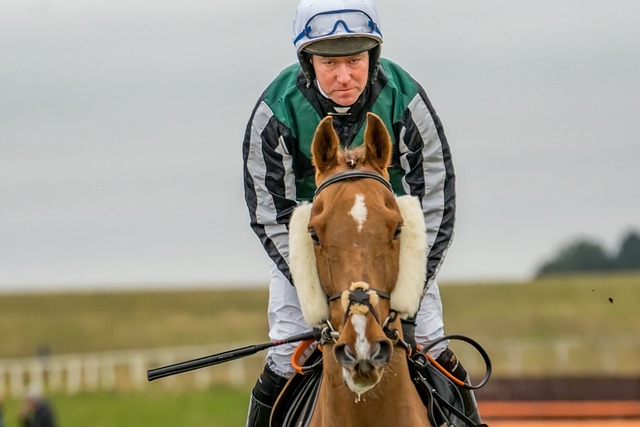
Some horses don’t suit Cheltenham’s sharper track or the intensity of Festival racing. Others are asked to run in races that prioritise speed over stamina when they’re built for marathon distances. When those same horses arrive at Aintree, over longer trips and a completely different set of fences, everything changes.

In recent years, several Grand National winners have followed this path – they’ve flopped at Cheltenham before producing the performance of their lives at Aintree. Their stories prove that Cheltenham form is useful, but it’s not the final word.

Corach Rambler

Corach Rambler’s main Cheltenham Festival runs came in the Ultima Handicap Chase, a long-distance handicap that produces staying types rather than Grade 1 stars. In 2022, he won that race over about three miles and a furlong, finishing first of 24 runners at 10/1 – a solid win but nothing that screamed Festival domination.

He followed up with another Ultima victory in 2023. Winning back-to-back at Cheltenham is impressive, but it wasn’t in the Festival’s top graded events. In the 2024 Cheltenham Gold Cup, he finished third behind Galopin Des Champs and Gerri Colombe.

However, Corach Rambler’s reputation rests on 15th April 2023, when he delivered one of the standout performances of the jump season to win the 175th Grand National at Aintree.

That victory was both a career high and a defining moment for the Scottish-trained gelding. It showed how a horse’s Festival form doesn’t always predict Grand National success.

Rule The World

Rule The World’s record before his 2016 Grand National win doesn’t include any standout Cheltenham Festival performances. He didn’t run in the marquee Festival races that season, and his earlier Cheltenham appearances ended with unremarkable results – no placings in championship chases or major handicaps.

His best Festival effort came years earlier with a sixth-place finish in the World Hurdle, a staying Grade 1, though that was nowhere near winning form.

Because of that lack of Festival impact, he was largely overlooked. Attention focused on higher-profile Festival runners instead. That made his Aintree success – coming from off the pace to win the 2016 Grand National at big odds – one of the more surprising results of that year’s jump season.

I Am Maximus

I Am Maximus didn’t make a big impression in major Cheltenham Festival races before his 2024 Grand National victory. Early in his career, he won an Open National Hunt Flat Race at Cheltenham in October 2020, but that was a standard NHF event rather than a championship chase, and it took place outside Festival week.

He’s since run in other high-profile races, but not in the key Festival handicap chases that punters watch closely each spring. As a result, he’s never been a headline name in Gold Cup Antepost betting markets, or in the build-up to Aintree. Yet he still went on to win over the Grand National fences at close to 7/1 in 2024.

Every Grand National Has a Horse Someone Will Always Remember

The Grand National is remembered less as a single race than as a succession of moments, stitched together by names that refuse to fade. Ask a group of racing fans what they recall most vividly and the answers rarely align. One remembers a dramatic fall at Becher’s. Another swears they still hear the roar when the winner emerges from the pack. But almost everyone will name a horse. Not necessarily the winner. Just the one that stayed with them.

This is the peculiar magic of the National. It does not insist on consensus. It invites personal attachment. A horse can finish fourth and still outlive the winner in someone’s memory. Another can be pulled up early yet remains unforgettable because it once carried hope for half a mile longer than expected. The race is democratic in that way, allowing individual meaning to form without instruction.

Some horses become famous because history tells us they should. Red Rum belongs to everyone now, as much a monument as a memory. Others are remembered more quietly, carried in private recollections rather than public record. These are the horses people mention without prompting, the ones that surface years later in conversations that begin, “Do you remember the year when…”

In the build-up to the race, that instinct to attach meaning begins early. Conversations drift from past editions to present speculation. From stories handed down as anecdotes of memorable Cheltenham betting moments to the anticipation that lead to these moments. Long before the tapes go up, people have already chosen the horse they will remember.

Why Memory Chooses Its Own Winner

What makes a horse linger in the mind is rarely performance alone. It is context. The colour of the silks. The way it travelled through the first circuit. The sense, however fleeting, that it might just do something extraordinary. Memory is drawn to near-misses and improbable surges as much as triumphs.

The Grand National and its winners magnifies this because of its scale. With so many runners, attention is constantly shifting. Viewers latch onto movement rather than position. A horse making steady progress through the field can become the focus of a living room, even if it never troubles the leaders. For a few fences, belief becomes vivid, and that is often enough.

The Horses That Belong to Individuals

Every long-standing racing fan has a personal list. Not written down, but stored instinctively. These are the horses tied to specific years, specific afternoons, sometimes specific people. A father’s pick. A horse backed on a whim. One chosen purely because the name felt right.

What matters is not whether the choice was sensible. It is that it created investment. The National rewards that emotional commitment by making every runner visible. For a moment, any horse can appear central to the story.

Why the Grand National Encourages Attachment

Other races are cleaner, more efficient, more easily summarised. The Grand National resists that. Its length and unpredictability create space for subplots. Horses appear and disappear. Fortunes rise and fall in seconds. The race refuses to focus solely on the winner.

This is why memory behaves differently here. People remember movement, effort and defiance. A horse that keeps going when others tire can feel heroic, regardless of where it finishes. The National allows these impressions to matter.

After the Finish Line

Once the race is over, the official result settles quickly. The winner is recorded. The margins are noted. But memory takes a different path. Days later, people still talk about the horse that almost got there, or the one that ran bravely until the final fence. These conversations keep the race alive beyond its conclusion.

In time, details blur. Years collapse into one another. Yet the remembered horse remains distinct. It becomes shorthand for a feeling, a moment when the impossible seemed briefly plausible.Today, many changes have taken place that don’t meet the golden days people recall.

Why That Will Never Change

As the sport evolves, the Grand National’s ability to create personal legends endures. Data grows richer. Coverage becomes more sophisticated. But none of that interferes with the instinct to choose a horse and follow it with unreasonable devotion.

Every year, someone watches the race and fixes their attention on a single runner. They carry that choice through the chaos and into memory. Long after the official winner is forgotten, that horse will remain vivid.

That is the quiet truth of the Grand National. It does not just crown a winner. It creates a thousand private stories, each anchored to a horse someone will always remember.