Why the Becher Chase Is Aintree’s December Dress Rehearsal for the National
The Grand National fences are about to be centre stage at Aintree on Saturday the 5th of December, when Becher Chase Day gives us a double-header over the most famous obstacles in jump racing. It’s the 3m2f (meaning three miles and two furlongs) Becher Chase along with the Grand Sefton Chase, which returns with a £100,000 prize fund for the first time since 2023. Now, this is perhaps the closest thing trainers have to a dress rehearsal before April, but why do so few Becher winners go on to actually win in April?
Where the Grand National Rehearsals Begin
The Becher Chase has been run since 1992 and takes in 21 of the National fences over around three and a quarter miles. It’s named after Becher’s Brook, which is the sixth fence on the National course. That itself takes its name from Captain Martin Becher.
He was thrown into the brook from his horse, Conrad, in one of the race’s earliest runnings, and the fence has been named after him. Not a bad way to be remembered. Some horses have made the Becher their own, with Hello Bud, Walk In The Mill and Vieux Lion Rouge each winning it twice.
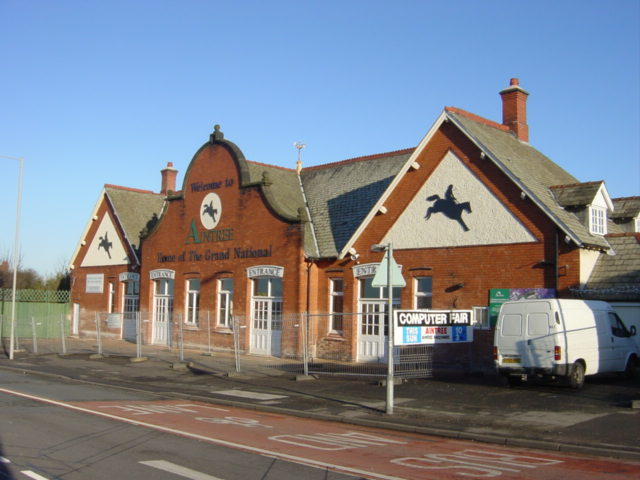
“Aintree Racecourse Entrance” (CC BY-SA 2.0) by Sue Adair
Trial to Winning Is Rarer Than You’d Think
For all its billing as an April trial, very few Becher winners have actually gone on to complete the job in the spring. Only two have managed it. Amberleigh House in 2004 and Silver Birch in 2007 won the National after landing the Becher in 2001 and 2004 respectively.
Part of the reason here is timing, as four months is a fairly long time in a horse’s season. The handicap system plays its part too, since a December winner will usually carry more weight by the time the National comes around. So most trainers end up treating this race as a test rather than a target.
Gates open at 10 am, with racing from 11:48 am (subject to change), and the Becher Chase itself is scheduled for 2:40 pm. We’ll then see a second test over the same fences in the Grand Sefton, and between them the two races should give us a clearer idea of which horses are primed for Aintree’s obstacles.
The tickets for this event range as high as £275, however, which can be expensive considering this isn’t even the Grand National. The race could attract more visitors if they ran promotional schemes. For instance, football clubs offer discounts to loyal fans. Burnley’s 100% Claret scheme rewards season ticket holders who attend every home league fixture with a 7.5% discount on the following season’s season ticket. In the wider entertainment market, some online platforms offer bingo bonus codes, like a £10 free bingo bonus linked to visiting a physical club, encouraging customers to attend in person and engage online.
A horse can be schooled over practice fences at home, but nothing quite matches a first run over the real thing, in a full field and in front of a crowd. The next National is on the 10th of April 2027, so there’s plenty of time for plans to change. Whether this year’s Becher winner can follow Amberleigh House and Silver Birch is another question, however.