Why the Becher Chase Is Aintree’s December Dress Rehearsal for the National

The Grand National fences are about to be centre stage at Aintree on Saturday the 5th of December, when Becher Chase Day gives us a double-header over the most famous obstacles in jump racing. It’s the 3m2f (meaning three miles and two furlongs) Becher Chase along with the Grand Sefton Chase, which returns with a £100,000 prize fund for the first time since 2023. Now, this is perhaps the closest thing trainers have to a dress rehearsal before April, but why do so few Becher winners go on to actually win in April?

Where the Grand National Rehearsals Begin

The Becher Chase has been run since 1992 and takes in 21 of the National fences over around three and a quarter miles. It’s named after Becher’s Brook, which is the sixth fence on the National course. That itself takes its name from Captain Martin Becher.

He was thrown into the brook from his horse, Conrad, in one of the race’s earliest runnings, and the fence has been named after him. Not a bad way to be remembered. Some horses have made the Becher their own, with Hello Bud, Walk In The Mill and Vieux Lion Rouge each winning it twice.
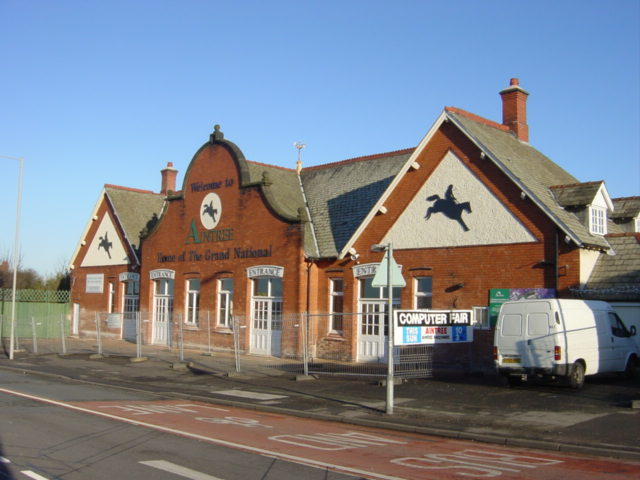
“Aintree Racecourse Entrance” (CC BY-SA 2.0) by Sue Adair

Trial to Winning Is Rarer Than You’d Think

For all its billing as an April trial, very few Becher winners have actually gone on to complete the job in the spring. Only two have managed it. Amberleigh House in 2004 and Silver Birch in 2007 won the National after landing the Becher in 2001 and 2004 respectively.

Part of the reason here is timing, as four months is a fairly long time in a horse’s season. The handicap system plays its part too, since a December winner will usually carry more weight by the time the National comes around. So most trainers end up treating this race as a test rather than a target.

Gates open at 10 am, with racing from 11:48 am (subject to change), and the Becher Chase itself is scheduled for 2:40 pm. We’ll then see a second test over the same fences in the Grand Sefton, and between them the two races should give us a clearer idea of which horses are primed for Aintree’s obstacles.

The tickets for this event range as high as £275, however, which can be expensive considering this isn’t even the Grand National. The race could attract more visitors if they ran promotional schemes. For instance, football clubs offer discounts to loyal fans. Burnley’s 100% Claret scheme rewards season ticket holders who attend every home league fixture with a 7.5% discount on the following season’s season ticket. In the wider entertainment market, some online platforms offer bingo bonus codes, like a £10 free bingo bonus linked to visiting a physical club, encouraging customers to attend in person and engage online.

A horse can be schooled over practice fences at home, but nothing quite matches a first run over the real thing, in a full field and in front of a crowd. The next National is on the 10th of April 2027, so there’s plenty of time for plans to change. Whether this year’s Becher winner can follow Amberleigh House and Silver Birch is another question, however.
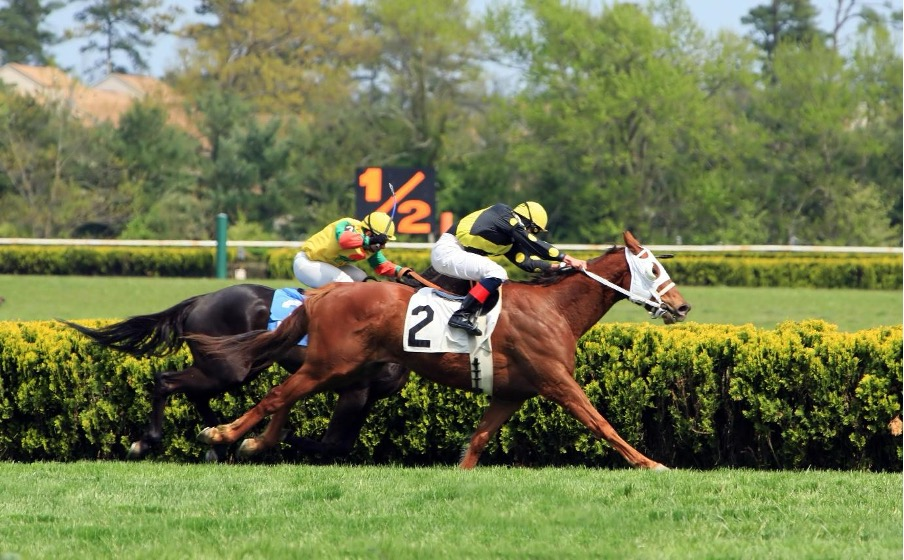
The biggest shocks in November Gold Cup history

Cheltenham’s November Meeting is the first big weekend of the jumps season, and its centrepiece is the Gold Cup, a handicap chase run since 1960. In horse racing, handicaps are built to give every runner a chance, and this one has produced some of the longest-priced winners at Cheltenham.
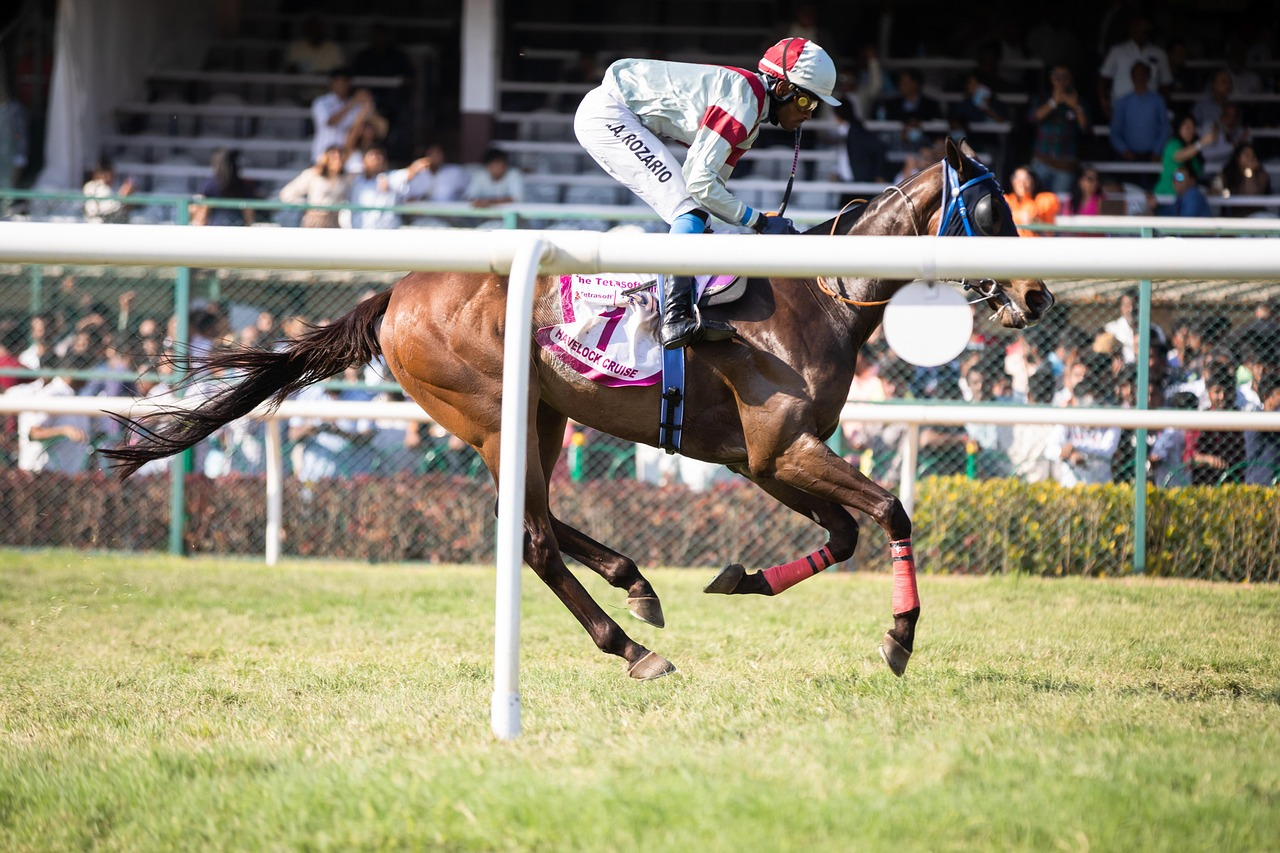
Senor El Betrutti, 1997

Senor El Betrutti is one of only two winners of the race to return 33/1. Jamie Osborne rode him for Susan Nock in a field of nine and beat Challenger Du Luc, the 100/30 runner-up for Martin Pipe and AP McCoy. The 15/8 favourite, Sparky Gayle, finished fourth.

The result was no one-off. Four weeks later, Senor El Betrutti came back to Cheltenham on 13 December, won again at 9/1 and beat Challenger Du Luc a second time, by two and a half lengths.

Chatham, 1970

The other 33/1 winner came in the middle of the longest winning run any trainer has put together in the race. Fred Rimell won four in a row from 1968 to 1971, with Jupiter Boy, Gay Trip, Chatham and Gay Trip again. Gay Trip went on to win the Grand National in April 1970, seven months before Chatham gave the yard its third straight win at 33/1.

Splash Of Ginge, 2017

No winner has returned a bigger price since. Splash Of Ginge started at 25/1 in a field of 17, and Tom Bellamy drove him home by a neck from Starchitect, a 10/1 chance. Kylemore Lough, the 4/1 favourite, was pulled up. It was Nigel Twiston-Davies’ fourth win in the race.

Little Josh, 2010

Twiston-Davies had already caused one upset seven years earlier. Little Josh won at 20/1 in 2010, ridden by the trainer’s son, Sam, and beat Dancing Tornado, another 20/1 shot, by two and three-quarter lengths in a field of 18. Two years before, the stable’s Imperial Commander had won the race at 13/2, and he went on to land the Cheltenham Gold Cup in March 2010.

The beaten favourite made it a bigger shock. Long Run started at 2/1 and finished third, and in March 2011 he won the Cheltenham Gold Cup itself.

Exotic Dancer and Cyfor Malta, the 16/1 winners

Cyfor Malta won at 16/1 in 2002, four years after his first win in the race. Barry Geraghty rode him for Martin Pipe, and he beat Poliantas, a 25/1 chance, by seven lengths in a field of 15. Chicuelo, the 2/1 favourite, failed to finish. No other horse has won the race twice with such a long gap between victories.

Exotic Dancer returned the same price in 2006. AP McCoy rode him for Jonjo O’Neill and beat Vodka Bleu, the 4/1 favourite, by three lengths in a field of 16. Exotic Dancer went on to finish second to Kauto Star in the Cheltenham Gold Cup the following March.

Grands Crus, 2012

Not every shock needs a big-priced winner. Grands Crus started the 7/4 favourite in 2012, the shortest price for a favourite in the race since at least 2000, and was pulled up. Al Ferof won at 8/1 for Paul Nicholls and Ruby Walsh, three lengths clear of Walkon in a field of 18.

Only six favourites won the race in the 24 runnings from 2000 to 2023, so a beaten favourite is the rule rather than the exception in one of the biggest handicaps in British horse racing.


Could a Fantasy Platform Make the Grand National More Engaging for Online Audiences?

The Grand National has appealed to spectators for over 185 years and has always managed to reach new generations of fans. Now, however, it’s contending with the digital age, in which many people discover sports online.

There are already various online activities surrounding the event such as quizzes and prediction games, but a centralised fantasy platform that offers users a way to compete with friends could be a huge draw for people seeking higher levels of engagement.

Source: Pixabay 

Quizzes and Prediction Competitions Already Boost Engagement

Ever since the early days of the Grand National, people have been able to get involved with the race beyond just watching it. There’s a thriving betting industry for the race, with one third of adults in the UK wagering on the event each year. Choosing a winner in this way can give people a horse to root for, rather than having to watch the race passively.

There are other ways to get involved online beyond betting as well. For instance, the Jockey Club has interactive quizzes around the event, which give fans the chance to test their knowledge of horse racing and the iconic Aintree meeting. There are also various websites offering virtual racing experiences, such as the Virtual Grand National.

It could be argued, though, that there should be an official platform for the Grand National that’s easily accessible. Through this, there could be quizzes and games, along with special promotions to encourage people to get involved.

It could take inspiration from casino bonus offers, which often feature prize draws, competitions, and challenges offering participants the chance to win rewards. The chance to win something could encourage more people to get involved. There’s already an Aintree Racecourse app, but this is primarily used for race information and event tickets. There’s an opportunity to expand it into something so much more.

Source: Pixabay 

Advanced Fantasy Platforms Could Attract More Players

One of the best options to get more people involved in the Grand National could be to develop an advanced fantasy platform that allows people to make predictions and compete in leagues. It could incorporate other races at Aintree as well to turn the whole festival into a gamified experience.

This could take inspiration from other platforms such as Fantasy Premier League. The official Premier League fantasy game has become hugely popular in recent years, and there are now more than 11 million players. The great thing about this is that it allows people to compete with others all over the world online, but it also has an option to create mini-leagues with friends.

A Grand National fantasy game could allow users to select several horses before the meeting begins. They could get points for finishing positions, performances, or other achievements throughout the event, such as clean jumps. This would give people more things to think about, rather than just betting on one or two horses to win.

With fantasy sports apps booming in popularity, it feels like the ideal time for an official fantasy Grand National game. This could be an excellent way to involve more people who want to make predictions but don’t want to bet money.

How Can YouTube Content Creators Help the Grand National Reach More Viewers Around the Globe?

Over the last few years, there has been a notable increase in YouTube content creators covering all sorts of sports. These often provide educational information about the sports and can sometimes take viewers to the venue in which they take place.

There are plenty of creators covering horse racing already, meaning that people from all over the world can enjoy races hosted in other countries. The Grand National is already a huge global event, but it could get even bigger as YouTube makes content about it more accessible.

YouTube Is Changing How People Consume Sports

The way people watch sports and sport-related content has changed a lot over the last decade, with YouTube emerging as one of the most important platforms for discovering sports for the first time. Live television is still important, but the video-on-demand service is the place to go for things like highlights and analysis.

YouTube is also now home to millions of channels that make sport-related content, and it has helped certain sports, including WWE, the UFC, and Formula 1, explode in popularity in recent years. The platform provides a range of ways for people to engage with sports too. They may first discover them through short-form clips and then seek out content creators who provide analysis and personalised perspectives.

There are a few horse racing content creators who are helping more people learn about the sport and events such as the Grand National. These include Stephen Power, known as The Racing Blogger, who documents global horse racing and major festivals, and Alan Johns, a former jockey who makes humorous content.

Various Ways to Engage with Horse Racing Online

The great thing about horse racing is that there have always been different ways to enjoy it. Aside from watching the race itself and enjoying the thrills, fans have engaged with other aspects of the sport such as betting on it and following certain trainers. There are also virtual options online that provide different experiences.

For instance, Sulkyland is a horse breeding and racing simulation, while Rival Stars Horse Racing VR Edition is a VR title that lets players manage horses. There are even horse racing slots online, such as Gold Horsey Winner. All these titles show that people want to experience horse racing in different ways, and YouTube content is just another option.

Content Creators Can Take Viewers into the Paddock

The great thing about horse racing content creators is the fact that they can offer viewers a glimpse of events like the Grand National that are difficult to experience through traditional broadcasts.

They can visit the racecourse and take their viewers with them into the paddock. There’s even the chance to live stream aspects of the event outside of the actual race, giving global viewers a sense that they are attending themselves.

The Grand National is now available around the world to watch via live streams, but content creators can provide access to different parts of the race that aren’t available on broadcasts. This could help the race become more popular with global viewers.

What Do IRE, FR, GB, and NZ Mean on a Grand National Racecard?

Pick up a Grand National racecard and you will often see three letters in brackets after a horse’s name.

IRE and FR appear regularly. GB is familiar enough, while USA, GER and NZ turn up less often in British jump racing.

The explanation is straightforward. The letters show where the horse was foaled.

They do not show where it is trained, where its owner lives or where it has spent most of its career. That is why a French-bred horse can be trained in Ireland and an Irish-bred runner can arrive at Aintree from a British yard.

Why Country Suffixes Appear

Country suffixes form part of a horse’s registered name. They help racing authorities distinguish between horses from different jurisdictions, particularly when the same name has been registered more than once.

Weatherbys introduced the GB and IRE suffixes in 1988. Similar codes are used internationally, with each referring to the horse’s country of foaling.

For anyone studying the Grand National, the suffix is useful background information. It is not a form guide on its own.

French and Irish breeding has enjoyed considerable success in British jump racing, but the letters beside a horse’s name cannot show whether it will stay the National distance, handle the ground or jump the Aintree fences.

For that, the form book still has to be opened.

The National Has Always Attracted Horses From Elsewhere

The list of Grand National winners contains horses bred across several countries.

Ireland has supplied many of the modern winners, while French-bred runners have also made their mark. New Zealand appears only occasionally, but three horses carrying the NZ suffix have won the race: Moifaa in 1904, Seagram in 1991 and Lord Gyllene in 1997.

Their shared suffix did not mean they followed the same route to Aintree.

Moifaa raced in New Zealand before travelling to Britain. Seagram was New Zealand-bred but trained in Britain by David Barons. Lord Gyllene began his career in New Zealand before being purchased by Sir Stanley Clarke and sent to Steve Brookshaw.

The letters recorded where each horse was born. Everything that happened afterwards had to be found elsewhere in its history.

Country Labels Have Different Jobs

The meaning of a location depends on where it appears.

An NZ real money online casino, for example, uses NZ to identify the market for which that online service is presented. On a racecard, the same two letters have a much narrower meaning: the horse was foaled in New Zealand.

That does not mean the horse was trained there immediately before the race. Nor does it tell us whether the owner, jockey or trainer has any connection to the country.

It is a precise piece of information, but only one piece.

Seagram’s Suffix Told Only the Beginning

Seagram provided a perfect example in 1991.

The NZ beside his name identified his birthplace, but his Grand National victory was prepared in Devon by David Barons. Nigel Hawke rode him, Sir Eric Parker owned him and he arrived at Aintree after winning a valuable handicap chase at Cheltenham three weeks earlier.

Seagram carried 10st 6lb and started at 12/1.

Garrison Savannah, who had won the Cheltenham Gold Cup, led after the final fence and looked set to complete a famous double. Seagram appeared to have been outpaced, but he stayed on strongly along the run-in.

He caught Garrison Savannah inside the final 100 yards and won by five lengths.

It was also the last year in which the Canadian drinks company Seagram sponsored the race, leaving Aintree with the unlikely result of the Seagram Grand National being won by Seagram.

Lord Gyllene Won Under Extraordinary Circumstances

Another NZ suffix appeared beside the winner six years later.

The 1997 Grand National should have been run on Saturday, but bomb threats forced Aintree to be evacuated. The race was rearranged for Monday, when spectators were admitted free of charge.

Lord Gyllene was not disturbed by the delay.

Tony Dobbin took him into the lead at the second fence and remained there. The New Zealand-bred gelding jumped fluently, drew clear before the final two fences and defeated Suny Bay by 25 lengths.

His owner had bought him after watching recordings of his races in New Zealand. Unlike Seagram, therefore, Lord Gyllene had a substantial racing record in the country shown beside his name.

A Racing Post feature on New Zealand-bred jumpers confirmed that Moifaa, Seagram and Lord Gyllene are the three NZ-bred horses to have won the Grand National.

Useful, but Never the Whole Story

Country suffixes help identify horses and preserve part of their breeding history.

They can lead readers towards useful questions about pedigree, previous racing and how a horse reached its current stable. What they cannot do is assess whether that horse is capable of winning at Aintree.

The NZ beside Seagram did not reveal his Cheltenham victory or his stamina on the National run-in. Lord Gyllene’s suffix did not predict that he would lead from the second fence and win by 25 lengths.

Read the letters and note what they mean.

Then move on to the form, weight, ground and jumping record. Those are the details that tell the rest of the story.


1 2 3 … 10