General

What time is the Grand National 2026?

grand national time 2026Sometimes it can be so easy to get caught up in the history and quality of Grand National Winners both past and present that we look right past the 2026 event that is now just two weeks away. To cut to the chase and inform you of the time and date of this national hunter masterclass, the Aintree Grand National takes place at the time of 4pm on Saturday, 11th April 2026.

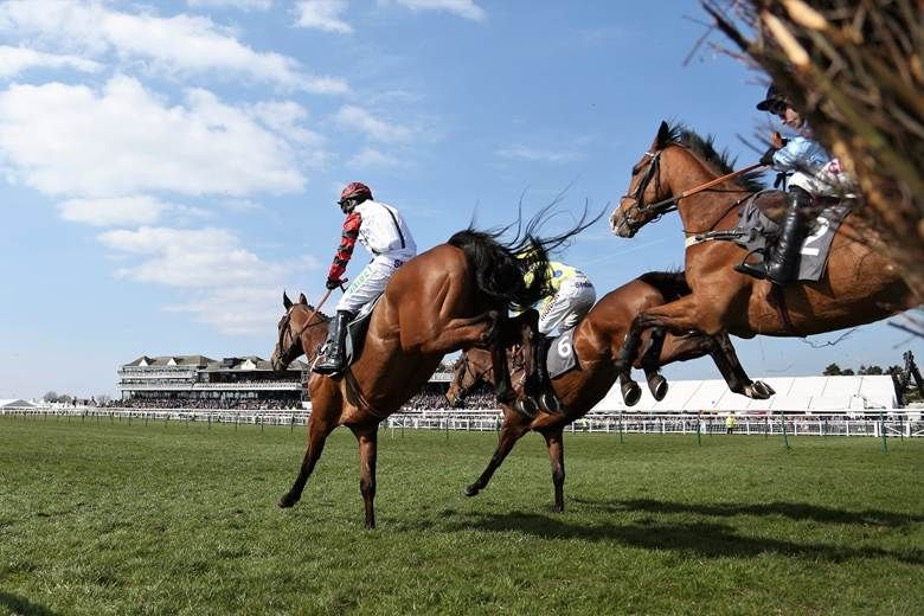
The race is part of a three day festival of high quality racing starting on Thursday 9th April and ending on Saturday 11th April. A great many will primarily be tuning in for the main event, spanning two laps of the aintree course, and jumps such as Becher’s Brook, The Chair and Canal Turn (16 unique fences, 30 jumped over two laps).

Current favourites to win the Grand National 2026 include I am Maximus at 8-1 (winner in 2024, second in 2025), the consistent Jagwar at 10-1 and Grangeclare West (third last year – a Willie Mullins favourite) at 10-1 also. Tune into the Grand National at 4pm (on ITV in the UK)  and don’t miss a second of the action.

For the full 2026 Grand National festival race schedule check here.


Betting on the 2026 Grand National Festival

The Cheltenham Festival has just concluded, showing why it is referred to as the Olympics of jump racing. It featured an exhilarating atmosphere at Prestbury Park, and the Cheltenham Roar set a high-energy tone from the word go. The tournament is usually the ultimate proving ground for the upcoming Grand National. The results of races, such as the Glenfarclas Cross Country Chase and the Ultima Handicap Chase, help identify formidable contenders for Aintree.

Willie Mullins showcased a historic dominance in an unprecedented power shift. He secured a rare marquee treble by winning the Champion Hurdle, Champion Chase, and the Gold Cup. While favourites like Lossiemouth and Gaelic Warrior met expectations, there were massive upsets like Apolon De Charnie in the Triumph Hurdle. This shifted Cheltenham betting by showing that horse racing offers shocking surprises.

We are now looking forward to the Grand National Festival, and understanding the betting scene will help you get the best out of the event.

Popular Betting Markets

Popular horse racing betting markets for the Aintree Festival include:

Win

This is the most fundamental betting market in horse racing. It specifically focuses on the horse that crosses the finish line first. In a high-variance race like the Grand National, the win market often offers the highest Grand National odds.

Each-Way

This is essentially two bets in one: a win bet and a place bet. If your horse wins, both parts of the bet pay out. If the horse finishes within the place terms, only the place part pays.

Place-Only

Unlike an each-way bet, a place-only wager focuses exclusively on the horse finishing within the top designated positions. It does not matter if the horse comes 1st or 4th; the payout remains the same.

Forecast and Tricast

These are exotic bets focused on the exact finishing order of the top horses. A straight forecast requires you to pick the 1st and 2nd horses in the correct order. A tricast requires the 1st, 2nd, and 3rd in the correct order.

The Tote Placepot

A unique pool-betting market where the goal is to pick a horse to place in each of the first six races of the day. This market focuses on consistency across the entire race card rather than a single event.

Match

In this market, the bookmaker pairs two horses against each other. It doesn’t matter where they finish in the overall race. The focus is on which of the two finishes ahead of the other.

Ante-Post

These markets open months before the festival. They offer higher odds before the final field of 34 is confirmed.

In-Running

This focuses on backing a horse to win while the race is ongoing. It features fluctuating live odds and an in-play cash-out option.

Types of Horse Racing Bets

When you’ve decided which markets you are interested in, it’s time to place your bets. The most commonly placed bets include the single (betting on one horse in one race), double (two selections in different races, and treble (three selections in three different races). Some bettors opt for an accumulator, combining bets on four or more selections.

Less common bets include:

  • Trixie: A multibet consisting of four bets on three selections (three doubles and one treble).

  • Patent: A variation of the trixie that includes three single bets in addition to the doubles and treble (seven bets total).

  • Yankee: A powerful structure involving 11 bets on four selections (six doubles, four trebles, and one four-fold accumulator).

  • Lucky 15: It consists of 15 bets on four horses (four singles, six doubles, four trebles, and one four-fold).

  • Straight Forecast or Tricast: These are single-race multiples.

  • Combination Bet: It allows you to select horses to finish in any order.

How to Interpret Horse Racing Odds

There are two major types of odds. Fractional odds are the traditional UK format, which displays two numbers separated by a slash, such as 5/1. The first number represents the profit you stand to make, while the second number is the stake required to make that profit. On the other hand, decimal odds like 6.00 are the digital format, popular on betting exchanges and apps. The odds represent the total return and not just the profit.

While decimal odds are quite straightforward, fractional odds require accurate interpretation.

  • Odds Against: The first number is larger than the second. The profit exceeds the stake.

  • Odds On: The second number is larger than the first. This indicates a heavy favourite. You must bet more than you stand to win.

  • Evens: This is the middle ground of the betting. A winning bet at events simply doubles your money. Your profit is exactly equal to your stake.

  • Short Odds: They suggest a high probability of winning but a small payout.

  • Long Odds: They suggest a very low probability but a massive payout if the horse pulls off an upset.

Expert Betting Tips

It is important to learn about the sport and understand the rich race history to make strategic betting decisions. This will improve your chances of a probable payout. Nonetheless, there are clear patterns in outcomes in the last decade. Below are tips you can pocket as you wager on your favourite horse or jockey:

  • Target the sweet spot horse age (8 to 10 years).

  • Evaluate the Cheltenham effect on the possibility of an underperformance for specific horses.

  • Check on the 11-stone weight threshold.

  • Compare the horses’ form.

  • Consider the “going” (ground conditions).

Responsible Gambling Practices

Gambling should be viewed strictly as a form of leisure and not as a method to solve financial issues. It is helpful to have a fixed budget for your gambling activities. Also, use the tools provided by operators to set bet and time limits to help you avoid chasing losses. Capitalise on digital safety tools like reality checks and time-outs to help you stay in control. If you are already having a gambling problem, contact responsible gambling expert brands to seek professional help.

The Predictions Market Craze: Superior to Sports Betting?

One of the great allures of the Grand National race each year is that it can often throw up betting value that is not widely available on other major races. We have seen a few 100/1 and 66/1 winners in the 21st century, and there have been recent winners like Noble Yeats (50/1) and last year’s winner, Nick Rocket (33/1), that have come home and decent prices, too.

Yet, the trade-off for that value is that it is a notoriously hard race to predict. The big field, the stern test of the Aintree fences, and the distance all combine to make it hard to parse out the favorites. Yes, there are trends and strategies that can help, but the market is often ‘wrong’ for the Grand National, and that means when you get those long-odds winners, it is the bookies that recoup the biggest profits as the favorites fail.

There is, however, a new form of betting that has come to the fore that feels a bit like the antithesis of the free-for-all offered by the Grand National – predictions markets. There’s been a massive boom in these platforms in recent years, pioneered by cryptocurrency-adjacent companies, yet they have now moved into mainstream sports betting platforms. For example, DraftKings Predictions Markets have launched online recently, offering customers the chance to bet on sports predictions as well as real-world political, cultural, and financial events.

Predictions Markets Can Be Based on Anything

So, what exactly are prediction markets and how do they differ from regular sports betting? Well, the starkest difference is that you can bet on just about anything. In some cases, the market itself can be created by the bettor. Say, for instance, you wanted to create a market on Shai Gilgeous-Alexander to win 4 NBA regular season MVPs by 2030, you could technically do so, albeit it might take a long time to settle.

The markets usually revolve around a yes/no settlement principle, and the potential odds/payout structure is driven by contrarian bettors taking an opposing view. This, you might say, is very similar to what happens on betting exchanges, but there is a broader market availability on offer.

As mentioned, predictions markets are relatively new, and they came about to offer markets to bet on real-world events. Right now, with the Iran War on the agenda, you might see a healthy trade on people betting on the price of oil by a specific date later in 2026. Yet, the arrival of platforms like DraftKings into the mix has opened up the sports predictions markets even further.

Choose the Best Odds For Your Wager

So, which is better? Traditional sports betting or sports predictions? Well, we would say that there is no right answer. Moreover, there is a best-of-both-worlds aspect to it. With sports betting, you get the odds set by the bookmaker. With prediction markets, you get the odds based on what people are betting on and against. Thus, one market might be more generous than the other.

And that essentially is the rub: the widespread availability of sports predictions markets means that you can start to compare the odds from the traditional sportsbook to the predictions market, choosing the best price. Indeed, it might be the case that you can find better odds for the upcoming 2026 Grand National in a predictions market. After that, all you need to happen is for your horse to conquer Aintree.

Understanding randomness and fairness in online casino games

Randomness and fairness form the backbone of trust in online gaming. This article explains how games are designed to protect player interests, outlining the importance of transparency, regulation, and responsible gambling in maintaining balanced play online.

The popularity of online gaming has surged as technology advances, bringing questions of fairness and randomness to the forefront. Slingo games are increasingly featured alongside traditional casino titles, reflecting evolving player preferences. For many individuals navigating virtual casinos, understanding how fairness is safeguarded can influence both confidence and enjoyment. The mechanisms and standards behind online casino games provide a clear structure to ensure that outcomes remain unbiased and unpredictable.

The role of random number generators in gameplay

One of the central mechanisms for supporting fairness in online casino games is the use of random number generators (RNGs). These algorithms are designed to produce unpredictable and unbiased sequences, forming the foundation for most digital betting events. When players spin reels on a virtual slot machine or participate in a digital card game, the outcome is determined by this code rather than human input. This helps to ensure that each game round is independent from previous ones and unaffected by players’ actions or the game’s history. Reliable RNGs aim to create an environment where everyone has the same statistical chance, upholding transparency and ethics in gameplay.

The continued oversight of RNG performance is essential to reducing the risk of manipulation or predictability. Regular audits by independent testing laboratories are a standard practice, with organisations evaluating whether RNGs work as intended. This type of regulation can provide reassurance to users and sets benchmarks for the online gaming sector. When operators comply with established standards, they demonstrate a commitment to fairness, reducing concerns about potentially rigged outcomes. A well-implemented RNG remains invisible to players, blending into the gaming experience while operating in the background to keep results random.

Certification and regulation create oversight and trust

Behind every reputable online casino lies a framework of licensing and certification. Regulatory authorities establish requirements that operators must meet before they can launch games to the public. This can include audits of the RNG as well as a site’s security practices, payout procedures, and responsible gaming policies. Adherence to these standards is often displayed through badges or certificates on gaming websites, allowing users to recognise trustworthy platforms at a glance. Third-party auditors may continue to examine providers to assess ongoing compliance, and regulatory standards are reviewed regularly in response to industry developments.

The transparency provided by these external reviews can give users a clearer view of what to expect from their gaming sessions. Some licensing authorities make information about audits and checks available, giving players insight into the operation of games. Knowing that a casino’s integrity may be monitored helps to build confidence among users. The most reputable sites promote responsible practices and offer tools for those who wish to set limits or seek protection. Maintaining a regulatory-first approach supports a fair online gaming environment for all involved.

Understanding house edge and game design mechanisms

The concept of house edge plays a pivotal role in shaping player experiences. In many online casino titles, the house edge represents the statistical advantage the operator holds, usually expressed as a percentage. This margin is designed to ensure that, over many plays, the casino has an expected profit, similar to traditional, land-based venues. For players, recognising the house edge gives clearer expectations regarding potential wins and losses over time. Publishing return-to-player (RTP) percentages can provide helpful insight and support informed participation.

Developers use a combination of mathematics and design principles to create structured games. Consistent game logic, structured payout tables, and variable bet options all contribute to an experience where each participant is given a fair chance within defined parameters. By understanding these mechanisms, individuals can select games that best suit their risk preferences and enjoyment. The balance between entertainment and statistical probability is a common feature of many online casino games.

Player perspectives on fairness and responsible play

Players are increasingly discerning when it comes to fairness and transparency in online casino games. Social forums, user reviews, and comparison sites let individuals share experiences and highlight instances of unusual patterns or concerns. This collective vigilance can create pressure for online platforms to maintain rigorous standards and address doubts that arise. Clear communication about the odds, rules, and payout structures can reduce uncertainty and strengthen community trust.

Responsible gambling initiatives are also increasingly present, providing users with tools and protections that support safe engagement. Deposit limits, self-exclusion features, and informational resources help create an environment in which individuals can make informed decisions. When operators take player concerns about fairness seriously and invest in education and outreach, the result can be a more transparent, reliable online casino experience for everyone involved. Sustaining fairness plays a part in maintaining player trust and supporting the ongoing stability of the industry.

Grand National betting trends shift as younger UK audiences embrace mobile-first wagering

The Grand National has always been more than a horse race. For generations, it has been a shared ritual, a sweepstake tradition, a once-a-year moment when casual viewers and dedicated racing fans alike focus on Aintree’s famous fences. The scale of interest has not changed. The way people engage with it, however, clearly has.

In recent seasons, betting patterns around the race have begun to reflect a broader shift in UK gambling behaviour. Younger audiences, in particular, are far more likely to place their bets through mobile apps and digital platforms rather than in betting shops or by phone. That change is subtle, but it is reshaping how the Grand National is experienced before, during and after the race itself.

A race that still anchors the betting calendar

By any measure, the Grand National remains one of the defining events of the British sporting year. Its mix of history, unpredictability and national attention continues to draw in both committed racing followers and people who might place only one bet all year.

What is different now is not the appeal of the race, but the route people take to engage with it. Industry data suggests that around 9 per cent of the UK population now participates in online sports betting, underlining how digital channels have become a normal part of the wagering world rather than a niche alternative.

That shift toward online participation helps explain why the Grand National’s audience increasingly approaches the day through apps and websites rather than physical betting shops.

The mobile-first generation arrives at Aintree

For many younger adults, the smartphone is the default way to interact with sport, media and entertainment. Betting fits neatly into that pattern. Instead of planning wagers days in advance, many now check form, prices and previews while commuting, scrolling, or watching the build-up coverage.

On Grand National day, this often means the experience is split across screens. The race is on the television. The data, odds and analysis are in hand. Bets are placed closer to the off, sometimes after watching the horses in the parade ring or listening to last-minute commentary.

In practice, mobile wagering tends to revolve around a few common habits:

  • Checking prices and form during the build-up rather than the night before
  • Placing bets closer to the start once the field and conditions are clearer
  • Using apps that combine race cards, statistics and betting tools in one place

This does not replace the tradition of studying the race. It changes the timing and pace of how many people now do it.

Tradition, history and the pull of the story

None of this diminishes what makes the Grand National special. The race’s history, its famous winners and its catalogue of dramatic finishes still form the emotional core of its appeal. For many fans, looking back at past champions and memorable renewals remains part of the annual ritual.

That sense of continuity matters. The Grand National works because it blends tradition with uncertainty. The fences are the same. The challenge is the same. The outcome is never guaranteed. Mobile-first betting habits simply sit on top of that, adding a layer of immediacy to an event that has always invited speculation and debate.

Betting in a wider digital gambling world

It also helps to see Grand National betting as part of a broader digital gambling environment, not as a standalone activity. This is especially clear when looking at Ireland, where digital participation continues to grow. Recent market analysis indicates that around 14.4 per cent of Ireland’s population took part in online gambling in 2024, highlighting how normalised app-based and web-based gambling has become across the Irish market as well.

Within that wider context, sports betting increasingly sits alongside other forms of online play. Looking at online slots in Ireland is part of the same digital ecosystem, not because they are directly connected to horse racing, but because they reflect how gambling habits have become app-based and cross-category.

A useful reference point here is Casino.org’s Ireland slots guide, which explains how online slots work, outlines different game types and covers the broader online casino environment in Ireland. Casino.org is a long-running informational site focused on explaining casino games, gambling formats and industry context rather than promoting specific operators. In this setting, it helps illustrate how sports betting and casino gaming now coexist within the same digital platforms and user habits.

A changing relationship with information and timing

One striking feature of mobile-first betting is how information-heavy it has become. Many younger bettors now consume more previews, statistics and analysis before committing to a wager. At the same time, the speed of mobile platforms makes it easier to act quickly, especially during long broadcast build-ups like the Grand National’s.

That combination of deeper information and faster decision-making is one of the defining characteristics of modern wagering and it helps explain why the race day experience now feels more fluid and reactive than it once did.

What this means for the future of the race

The Grand National is unlikely to lose its place as a national sporting moment any time soon. If anything, digital platforms have made it more accessible to casual fans who might not follow racing closely during the rest of the year.

What is changing is the texture of engagement. For younger audiences, betting is increasingly mobile rather than shop-based, tied to live viewing rather than planned days in advance and part of a wider digital gambling environment rather than a single-purpose activity.

The roar of the crowd at Aintree, the drama at the last fence and the stories that emerge from each renewal will always define the race. Around those constants, a new layer of behaviour is taking shape, built around smartphones, apps and real-time interaction and that shift is now a visible part of how the Grand National is followed.