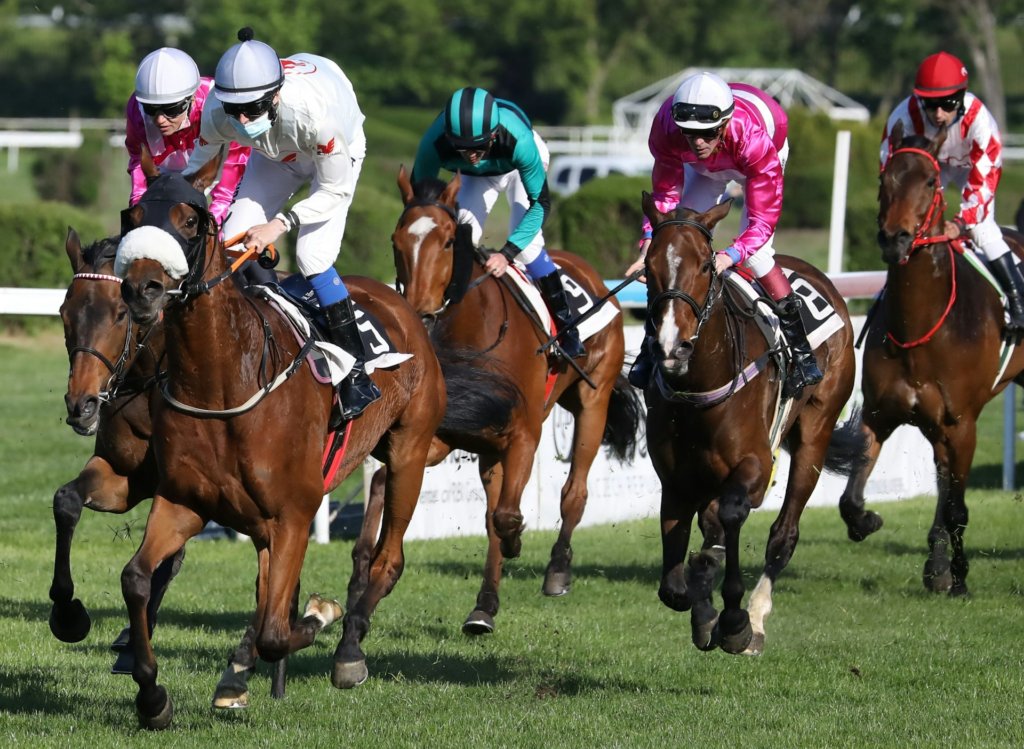
 The Grand National is not just a longer race with bigger obstacles. It is a different racing code, built around jumping, stamina, and handicap weights. America’s biggest races usually sit inside the Triple Crown frame. They are flat dirt contests for younger horses.
That contrast matters in 2026 because both sides are changing in visible ways. I Am Maximus won the Grand National at Aintree on eleven April, while Golden Tempo won the Kentucky Derby on two May. The comparison starts with the ground under the horses.
Course Shape Changes Everything
Aintree asks horses to cover about four miles and two and a half furlongs. The race also includes 30 spruce-topped fences across two circuits, making rhythm as important as raw pace. American classics are much shorter, with the Kentucky Derby run over one and a quarter miles on dirt at Churchill Downs.
That single difference changes the whole read of a contender. When navigating horse race betting sites, fans will often see the Grand National framed around stamina, jumping record, and handicap weight. Meanwhile, American classics lean more on pace maps and dirt form. A Grand National runner must stay organised after repeated jumping efforts. A Derby horse must handle position, traffic, and a fast closing quarter without any fence breaking its stride.
Jumping Turns Form Into a Technical Exam
The Grand National is a steeplechase, so each fence becomes part of the race evidence. Becher’s Brook, The Chair, and Canal Turn test balance, timing, and recovery under pressure. A runner can have strong stamina and a fair weight, but weak fencing can quickly expose that profile.
American headline races remove that layer. The Kentucky Derby and Preakness are flat races, so the key data comes from pace shape, draw position, and late speed. Sectional strength is easier to compare on an uninterrupted track, while the Grand National keeps testing execution at every fence.
Handicaps Make the Field Read Differently
The Grand National is a handicap, so runners carry different weights set by the official handicapper. That system brings horses of different ratings closer together, rather than letting raw class decide everything. A stronger chaser may carry more weight, while a less exposed runner may get a lighter task. That makes the race more open because weight becomes part of the form puzzle.
The Derby works differently. It is limited to three-year-olds and uses prep races to shape the field. The main question is how well a young horse is developing compared to others from the same crop. That creates a cleaner age-based comparison, while the Grand National asks readers to judge older chase form through stamina, jumping reliability, and assigned weight.
Age and Race Type Split the Talent Pool
Aintree attracts experienced jumpers because the race is open to horses aged seven and above. That matters because a horse must already have proven chase experience before facing the National fences. The event rewards durability built across several seasons.
America’s major spring races focus on three-year-old Thoroughbreds. The Derby, Preakness, and Belmont are tied to one crop, which gives them a sharper developmental storyline. Golden Tempo’s Derby win underlined that pattern, especially after his team chose to skip the Preakness and aim for the Belmont.
The Calendar Creates Different Pressure
The Grand National stands as one huge target within the British jump season. Trainers can build a campaign around stamina, schooling, and handicap position months in advance. That gives the race a long lead-up, where preparation is shaped around one demanding day at Aintree.
The American Triple Crown is compressed by design. In 2026, the Preakness is scheduled for sixteen May at Laurel Park because Pimlico is under renovation. The Belmont follows on six June at Saratoga, so the top three-year-olds face a much tighter turnaround than Grand National runners. That schedule puts more focus on recovery, travel, and whether a horse can hold peak form across several major races.
Different Tracks, Different Truths
The Grand National shows what happens when stamina meets obstacles over an extreme trip. It asks for staying power, clean jumping, and the ability to keep form under constant interruption. That is why a previous Aintree winner like I Am Maximus could return with a profile that still mattered.
America’s biggest races reveal a different kind of class. They expose acceleration, tactical speed, and how a young horse handles a crowded dirt race. Neither model is softer, but each measures excellence with a different ruler.
The Real Split Is the Question Each Race Asks
The cleanest way to compare these races is not to rank them. The Grand National asks which horse can keep solving problems after the race has already become untidy. The American classics ask which young runner can produce class inside a fixed, high-speed frame.
That difference is why form from one world does not translate neatly into the other. Aintree rewards the complete chase profile, while America’s spring races reward the sharpest classic profile. The best reading comes from treating them as separate tests, not rival versions of the same idea.