Silver Birch

Run on good going on April 14, 2007, the 2007 Grand National featutred a maximum 40 runners, including the winners from the past two years, Hedgehunter, trained by Willie Mullins, and Numbersixvalverde, trained by Martin Brassil. Co-favourites at the ‘off’ were Point Barrow, who fell at the very first fence, Monkerhostin, who refused at the seventh fence, ‘Foinavon’, on the first circuit, and Joe’s Edge, who was pulled up lame when well behind on the second.

In the absence of the market leaders, 16 horses were still standing turning for home, with at least half of them still in serious contention. Slim Pickings, ridden by Barry Geraghty, led over the second last, but was joined, and passed, at the final fence by Silver Birch, ridden by Robbie Power. Silver Birch took a clear lead, but approaching the famous ‘Elbow’, halfway up the run-in, Geraghty conjured a renewed effort from Slim Pickings, while Tom O’Brien produced his mount, McKelvey, with a withering run on the wide outside. The latter, who finished lame, was arguably unlucky, but Silver Birch passed the post three-quarters of a length to the good, with Slim Pickings a further length-and-a-quarter away in third place and 100/1 outsider Philson Run 15 lengths back in fourth.

Silver Birch had won the Becher Chase, over the Grand National fences, and the Welsh Grand National at Chepstow in 2004, as a seven-year-old, when trained by Paul Nicholls. However, the Clearly Bust gelding arrived at Aintree winless in nine starts, including four since joining Gordon Elliott in Longwood, County Meath the previous December. He finished a creditable second in the Cross Country Chase at the Cheltenham Festival, but was sent off a largely unconsidered 33/1 chance for his second attempt in the Grand National. Nevertheless, he was a memorable winner for Elliott, who was still in his first season as a licensed trainer and had yet to saddle a winner in his native Ireland. Reflecting on his subsequent rise through the ranks, Elliott said, “I didn’t get one horse out of training Silver Birch. I got my name out after that, but I had to prove I could go and train winners.”

Comply Or Die

On April 5, 2008, a maximum field of 40 runners went to post for the Grand National. Joint-favourites at the ‘off’ were Cloudy Lane, trained by Donald McCain and carrying the famous green, yellow and white silks of the late Trevor Hemmings, and Comply Or Die, trained by David Pipe and carrying the equally famous blue, green and white silks of the late David Johnson. The pair had finished first and second in the Tommy Whittle Chase at Haydock the previous December and, at Aintree, Comply Or Die was 4lb better off for the two-and-a-half lengths he was beaten on that occasion.

Since Haydock, Cloudy Lane had gone on to complete a hat-tirck, in the Grimthorpe Chase at Doncaster, while Comply Or Die had won the Eider Chase at Newcastle on his only subsequent start, so both market leaders arrived at Aintree at the top of their form. In an eventful renewal, overshadowed by the death of the 2007 runner-up McKelvey, who unseated jockey Tom O’Brien early on the second circuit and was fatally injured while running loose, just 15 of the 40 starters completed the course.

Ridden by Jason Maguire, Cloudy Lane was asked for an effort three fences from home, where he made a mistake, and thereafter weakened to finish a distant sixth. Comply Or Die, meanwhile, led going well two out and, once shaken up by jockey Timmy Muphy, forged clear on the run-in to put four lengths between himself and his nearest pursuer, King Johns Castle, with Snowy Morning a close third, a further length-and-a-half away, with 16 lengths back to the fourth horse home, Slim Pickings.

Comply Or Die ran in the next three Grand Nationals. In 2009, off a 15lb higher mark, he finished 12-length runner-up to 100/1 outsider Mon Mome, in 2010, he finished a distant twelfth behind Don’t Push It and, in 2011, was tailed off when pulled up two out behind Ballabriggs. He was retired immediately afterward, with Pipe saying, “He’s been great for Pond House, for me and for David Johnson and his family and everyone involved with him.”

John and Thady Gosden’s best chances at Royal Ascot

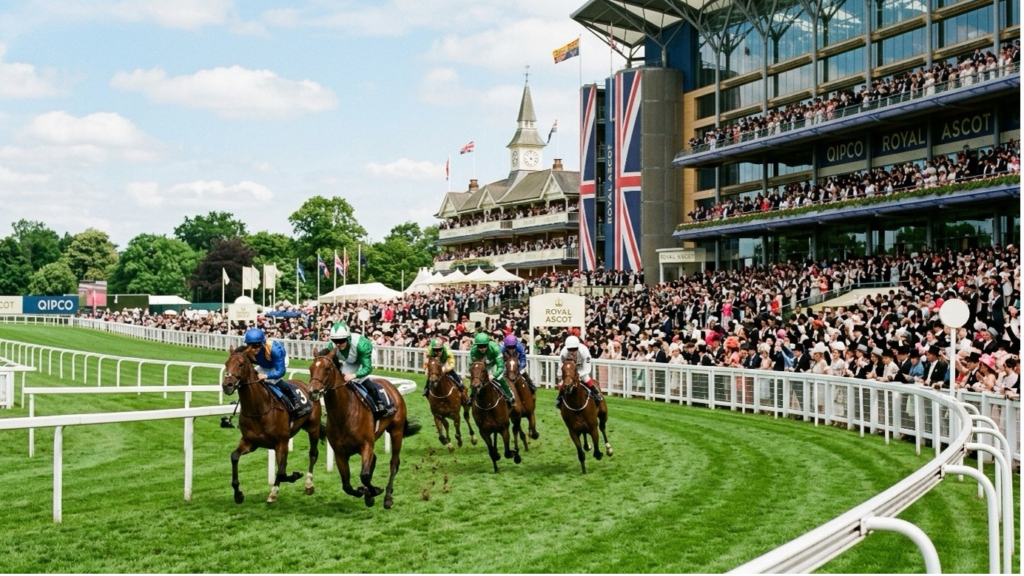
John and Thady Gosden arrive at Royal Ascot in excellent fettle. The father-and-son training partnership were the meeting’s leading trainers in 2025, saddling five winners, including Trawlerman in the Gold Cup and Field Of Gold in the St James’s Palace Stakes, and they look well-equipped to defend that title this summer. For those looking to bet on horse racing at the Royal meeting, the Clarehaven team offer some of the most compelling options across the five days. Here are three of their leading ante-post entries.


Damysus: Queen Anne Stakes (5/1)


The Queen Anne Stakes is the traditional curtain-raiser on day one, and Damysus looks an exciting contender for the Gosdens in the opening Group 1 of the week. The Wathnan Racing-owned Frankel colt was placed in the Sandown Classic Trial and the Dante at York as a three-year-old, though a tilt at Derby glory proved a step too far as he finished last of 18 at Epsom. He showed his quality later in that campaign, however, dropping back from a mile and a half to win in Listed company in France before rounding off the season with victory over nine furlongs in the Darley Stakes in October.


He returned to action at the Craven meeting this spring, and he looks set to make his mark at the highest level, judged on a dominant comeback success in the Earl of Sefton Stakes at Newmarket. The Queen Anne is a step up in class and over a slightly shorter trip, but a horse with a Frankel pedigree operating at an official rating of 113 has every right to feature at 5/1, and connections clearly believe the straight mile at Ascot will play to his strengths.


Ombudsman: Prince of Wales’s Stakes (7/2)


If Damysus is the exciting prospect, Ombudsman is the proven commodity. The five-year-old Night of Thunder gelding won the Prince of Wales’s Stakes at Ascot and the Juddmonte International at York in 2025, reaching an official rating of 128 and earning recognition as the world’s best racehorse. He found only Calandagan too good when bidding for a third Group 1 of the campaign in the Champion Stakes on Champions Day, but that was no disgrace against a horse in the form of his life.


He returned for his 2026 campaign in the Dubai Turf at Meydan, winning comfortably by a length and three-quarters, confirming that all is well heading into the summer. He holds entries for both the Tattersalls Gold Cup at the Curragh and the Prince of Wales’s Stakes at Royal Ascot, with the latter the obvious target given he is the defending champion.


Those browsing the Royal Ascot odds will note that 7/2 for the reigning winner of the race, who is arguably the best middle-distance horse in Europe, represents a fair rather than generous price, which tells you plenty about the quality of opposition he is likely to face. He remains the one to beat.


Trawlerman: Ascot Gold Cup (10/3)


The staying division belongs to Trawlerman. The Godolphin-owned eight-year-old made every yard of the running in the 2025 Gold Cup, drawing seven lengths clear of Illinois in an imperious display under William Buick, and he also won the British Champions Long Distance Cup at Ascot in October 2025, his second victory in that race having also landed the 2023 renewal.


After his Gold Cup victory, John Gosden confirmed that Trawlerman would not be over-raced, hinting that the Henry II Stakes at Sandown could be his spring prep before another tilt at the two-and-a-half-mile feature. At 10/3, he is not the favourite, with the O’Brien-trained Scandinavia heading the market, but Trawlerman has a course record, proven stamina, and the ideal front-running tactics that have served him so well at Ascot. He is a formidable defending champion and one of the most reliable stayers in Europe over the past three seasons.


2027 Grand National Preview – First Thoughts

The 2027 Grand National is currently scheduled for Saturday, April 10th, 2017 at 16:00 BST. The weights for the world-famous steeplechase will not be published until February, but ante-post betting is already available and it is interesting to see what the leading bookmakers make of the second leg of the traditional ‘Spring Double’ at this early stage.

I Am Maximus, owned by John McManus and trained by Willie Mullins, has already won the Grand National twice, in 2024 and 2026, and finished runner-up to stable companion Nick Rockett in between times, so it is no surprise that the 10-year-old is the early ante-post favourite at a top-priced 12/1. I Am Maximus was already officially rated 168 for his second victory at Aintree, but the 5lb rise in the weights mooted by BHA handicapper Martin Greenwood hardly looks insurmountable and, granted an uninterrupted preparation, the Authorized gelding may yet make further history in 2027.

Next best in the current ante-post list, all at 16/1, come Iroko, Jordans and Soldier In Milan. The first-named is another owned by John McManus and has run creditably on both previous attempts in the Grand National, finishing fourth, when favourite, in 2025 and second, beaten two-and-a-half lengths, in 2026. All his wins, over hurdles and fences, have come at or around two-and-a-half miles, but joint-trainer Josh Guerriero expressed confidence in the eight-year-old, telling the ‘Racing Post’, “We’ll come back and win it next year.”

Jordans, trained by Joseph Patrick O’Brien, made a bold bid to make his first attempt in the Grand National a winning one, taking a clear lead turning for home, but being chased down by the McManus-owned pair in the closing stages. He has just one win over fences to his name, but was twice runner-up in Grade 1 novice chases and, as a seven-year-old, has time on his side as far as the Grand National is concerned.

Soldier In Milan, trained by Emmett Mullins, in another inexperienced seven-year-old, who was, nevertheless, a runaway, 16-length winner of the Irish Grand National at Fairyhouse in April 2026. His trainer clearly knows what is required to win the Grand National, having done so with the seven-year-old Noble Yeats in 2023, so his progress should be interesting to follow.

How the Grand National Differs From America’s Biggest Horse Races

The Grand National is not just a longer race with bigger obstacles. It is a different racing code, built around jumping, stamina, and handicap weights. America’s biggest races usually sit inside the Triple Crown frame. They are flat dirt contests for younger horses.

That contrast matters in 2026 because both sides are changing in visible ways. I Am Maximus won the Grand National at Aintree on eleven April, while Golden Tempo won the Kentucky Derby on two May. The comparison starts with the ground under the horses.

Course Shape Changes Everything

Aintree asks horses to cover about four miles and two and a half furlongs. The race also includes 30 spruce-topped fences across two circuits, making rhythm as important as raw pace. American classics are much shorter, with the Kentucky Derby run over one and a quarter miles on dirt at Churchill Downs.

That single difference changes the whole read of a contender. When navigating horse race betting sites, fans will often see the Grand National framed around stamina, jumping record, and handicap weight. Meanwhile, American classics lean more on pace maps and dirt form. A Grand National runner must stay organised after repeated jumping efforts. A Derby horse must handle position, traffic, and a fast closing quarter without any fence breaking its stride.

Jumping Turns Form Into a Technical Exam

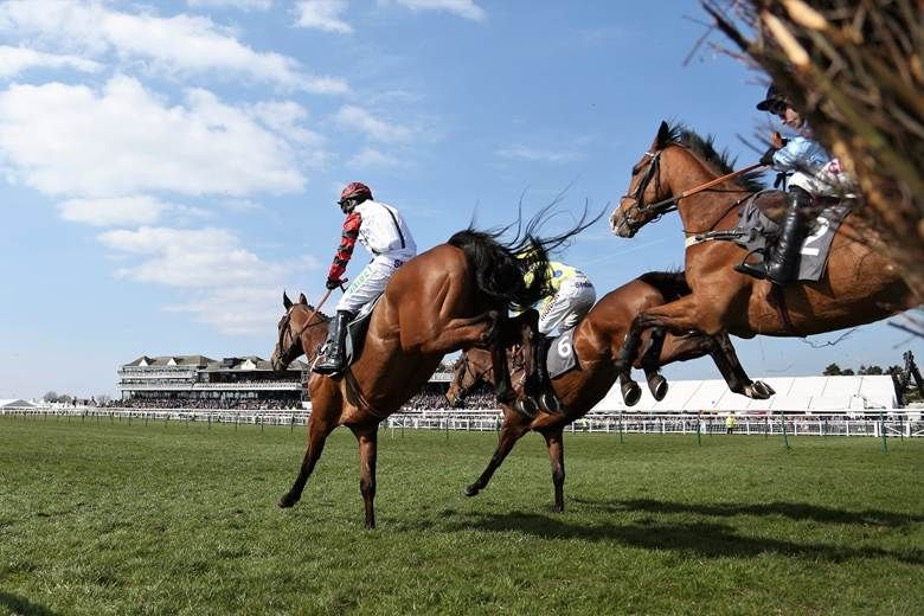
The Grand National is a steeplechase, so each fence becomes part of the race evidence. Becher’s Brook, The Chair, and Canal Turn test balance, timing, and recovery under pressure. A runner can have strong stamina and a fair weight, but weak fencing can quickly expose that profile.

American headline races remove that layer. The Kentucky Derby and Preakness are flat races, so the key data comes from pace shape, draw position, and late speed. Sectional strength is easier to compare on an uninterrupted track, while the Grand National keeps testing execution at every fence.

Handicaps Make the Field Read Differently

The Grand National is a handicap, so runners carry different weights set by the official handicapper. That system brings horses of different ratings closer together, rather than letting raw class decide everything. A stronger chaser may carry more weight, while a less exposed runner may get a lighter task. That makes the race more open because weight becomes part of the form puzzle.

The Derby works differently. It is limited to three-year-olds and uses prep races to shape the field. The main question is how well a young horse is developing compared to others from the same crop. That creates a cleaner age-based comparison, while the Grand National asks readers to judge older chase form through stamina, jumping reliability, and assigned weight.

Age and Race Type Split the Talent Pool

Aintree attracts experienced jumpers because the race is open to horses aged seven and above. That matters because a horse must already have proven chase experience before facing the National fences. The event rewards durability built across several seasons.

America’s major spring races focus on three-year-old Thoroughbreds. The Derby, Preakness, and Belmont are tied to one crop, which gives them a sharper developmental storyline. Golden Tempo’s Derby win underlined that pattern, especially after his team chose to skip the Preakness and aim for the Belmont.

The Calendar Creates Different Pressure

The Grand National stands as one huge target within the British jump season. Trainers can build a campaign around stamina, schooling, and handicap position months in advance. That gives the race a long lead-up, where preparation is shaped around one demanding day at Aintree.

The American Triple Crown is compressed by design. In 2026, the Preakness is scheduled for sixteen May at Laurel Park because Pimlico is under renovation. The Belmont follows on six June at Saratoga, so the top three-year-olds face a much tighter turnaround than Grand National runners. That schedule puts more focus on recovery, travel, and whether a horse can hold peak form across several major races.

Different Tracks, Different Truths

The Grand National shows what happens when stamina meets obstacles over an extreme trip. It asks for staying power, clean jumping, and the ability to keep form under constant interruption. That is why a previous Aintree winner like I Am Maximus could return with a profile that still mattered.

America’s biggest races reveal a different kind of class. They expose acceleration, tactical speed, and how a young horse handles a crowded dirt race. Neither model is softer, but each measures excellence with a different ruler.

The Real Split Is the Question Each Race Asks

The cleanest way to compare these races is not to rank them. The Grand National asks which horse can keep solving problems after the race has already become untidy. The American classics ask which young runner can produce class inside a fixed, high-speed frame.

That difference is why form from one world does not translate neatly into the other. Aintree rewards the complete chase profile, while America’s spring races reward the sharpest classic profile. The best reading comes from treating them as separate tests, not rival versions of the same idea.